




Royal Caribbean's Best Specialty Restaurants — And How to Get the Most Out of Them


Royal Caribbean's Best Specialty Restaurants — And How to Get the Most Out of Them
A restaurant-by-restaurant look at which specialty venues deliver, what they cost, and when a dining package pays off.
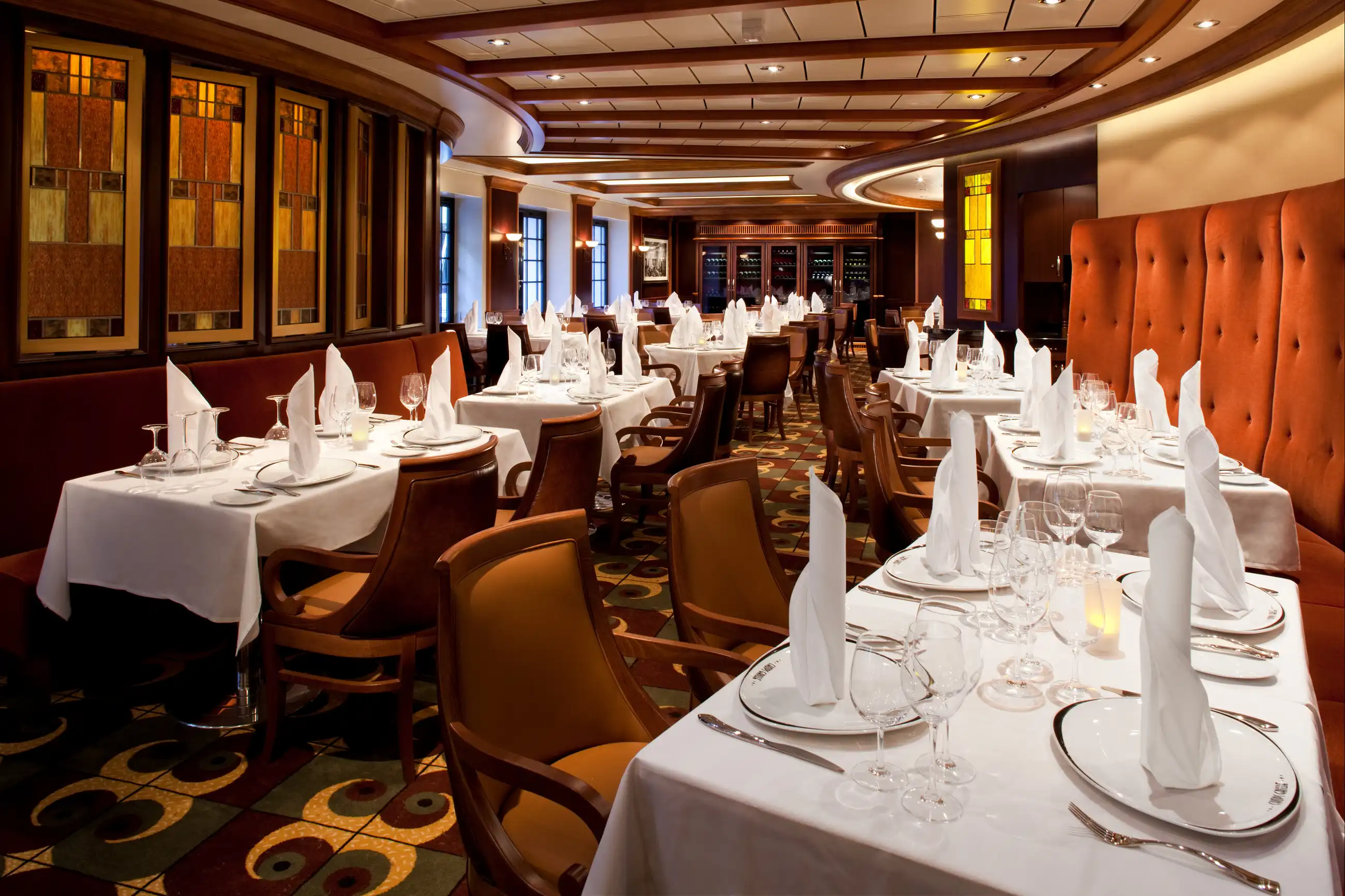
The Chops Grille steakhouse dining room aboard Allure of the Seas, with wood-paneled walls, burnt-orange tufted banquettes and white-draped tables set for dinner.
Royal Caribbean's Main Dining Room is included in your fare, and on most ships it is genuinely good — multiple courses, attentive service, a rotating menu each night. Plenty of cruisers eat there every evening and leave perfectly happy. So the question with specialty restaurants is not whether complimentary dining is bad. It is not. The question is whether spending $40 to $75 per person for a different experience changes the shape of your evening in a way that feels worth it.
For most people, on most ships, the answer is yes — at least once or twice during a sailing. The specialty venues are not just better food, though several genuinely are. They are smaller rooms, different energy, a sense of occasion that turns an ordinary Tuesday night into something you actually talk about afterward. What follows is a walk through the restaurants worth booking, what makes each one distinct, the dining packages that can save real money, and the honest calculus of when those packages do not make sense.
Common questions about Royal Caribbean specialty dining
Before we walk through every restaurant worth booking, here are the questions readers ask most — answered up front.
Q1Are Royal Caribbean specialty restaurants worth the extra cost?
In most cases, yes — the best venues deliver noticeably better food, smaller dining rooms, and more attentive service than the Main Dining Room.
The difference is most apparent on larger ships where the complimentary venues are serving thousands of guests simultaneously.
Q2How much do specialty restaurants cost on Royal Caribbean?
Cover charges vary because Royal Caribbean uses dynamic pricing — the same restaurant on the same ship can cost different amounts depending on when you book and how full the sailing is.
Booking through the Cruise Planner well before your sail date generally locks in the lowest price.
Q3Does the Royal Caribbean dining package save money?
It depends on how many specialty meals you plan to have. Royal Caribbean offers a 3-Night Dining Package and an Unlimited Dining Package, and the math only works in your favor if you intend to eat at multiple venues.
If you only want one or two specialty dinners during a week-long cruise, paying à la carte is usually cheaper.
Q4Which Royal Caribbean specialty restaurants are the best?
The standout venues vary by ship class, since Royal Caribbean's fleet of over two dozen vessels carries different restaurant lineups.
We break down the strongest options — and a few that may not justify the spend — in the full guide below.
Q5When should you book specialty dining on Royal Caribbean?
As early as possible through the Cruise Planner before your sailing. Prices tend to rise as the ship fills, and popular time slots on sought-after sailings can sell out.
Inside the Specialty Restaurants
From polished steakhouses to inventive concept kitchens, Royal Caribbean's specialty venues trade the scale of the Main Dining Room for smaller rooms, à-la-carte menus, and noticeably different pacing.
What Specialty Dining Actually Changes About Your Evening
The Main Dining Room on a Royal Caribbean ship seats hundreds of people at once. The kitchen produces thousands of plates each evening, and the logistics of that operation are impressive — but they impose limits. Courses come at a steady pace. The menu covers a range of tastes rather than going deep in any single direction. The room itself is often large, sometimes loud, and the atmosphere is communal rather than intimate.
A specialty restaurant flips most of those conditions. The rooms are smaller — often seating fifty to eighty guests. The kitchen behind each venue is dedicated to a single cuisine, which means the cooks do one thing and do it well. Your server covers fewer tables, so the pacing feels unhurried without dragging. And the design of each space is intentional in a way that the MDR, which has to work for everyone, simply cannot be.
The practical effect is that a specialty dinner feels like going out. You walk through the ship to a restaurant with its own entrance and its own mood, and the next two hours feel more like a night at a good restaurant on land than a meal aboard a cruise ship. That shift in atmosphere is what you are really paying for. The food is the vehicle, but the evening is the product.
One detail that trips up first-timers: specialty restaurants on Royal Caribbean charge a flat cover fee, not à la carte pricing for each dish. You pay per person — typically between $40 and $75 depending on the venue and the ship (as of mid-2026) — and then order as many courses as you like. Appetisers, mains, desserts, extra sides — all included. A few venues on newer ships offer premium add-ons like a higher-grade steak cut, but the base cover gets you a full, multi-course dinner without watching the bill grow.
The Restaurants Worth Booking
Not every specialty restaurant on every ship is equally strong. Royal Caribbean's fleet spans over two dozen vessels, and the dining roster varies considerably — a Voyager-class ship from the early 2000s might have three specialty options while Icon of the Seas has more than a dozen. But certain restaurants appear across much of the fleet and have earned consistently positive reputations among returning cruisers. These are the ones to prioritise.
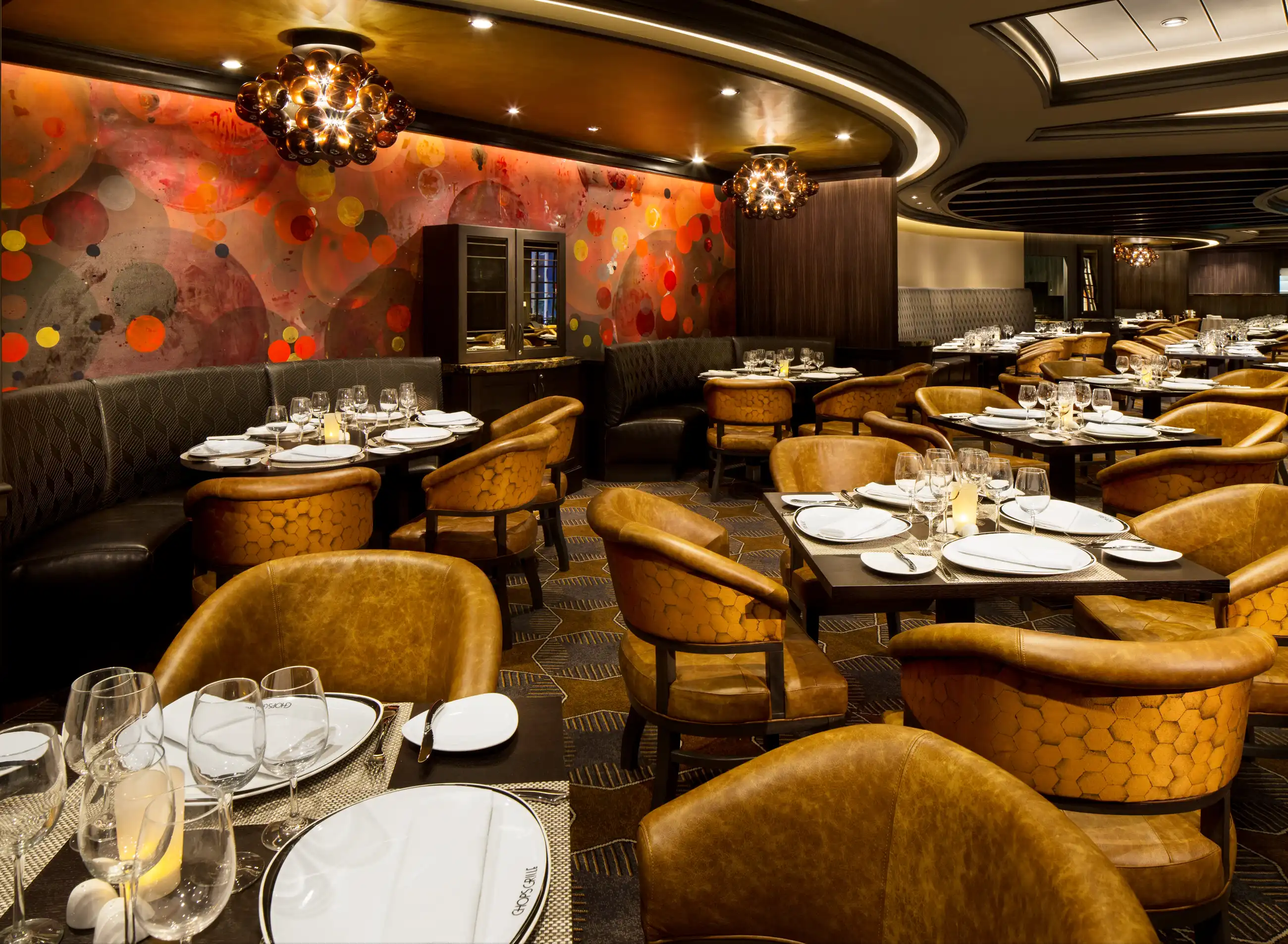
Chops Grille is the closest thing Royal Caribbean has to a dining institution. It appears on every ship in the fleet, and it has been around long enough that frequent cruisers have eaten there dozens of times. The concept is straightforward: American steakhouse, quality cuts, classic sides, reliable execution. The filet is the popular order. The key lime pie is worth saving room for. Chops does not surprise you — it satisfies you, consistently, which is harder than it sounds when a kitchen is working on a moving ship. Cover charges run roughly $55 to $65 per person as of mid-2026.
Giovanni's Italian Kitchen and Wine Bar brings a warmth that suits a cruise evening particularly well. The menu runs through antipasti, handmade pastas, and Italian-American mains, and the portions are generous enough that sharing appetisers across the table becomes part of the experience. The wine list leans Italian, predictably, and the room on most ships has a convivial, slightly rustic feel. Cruisers on Cruise Critic forums regularly cite Giovanni's alongside Chops as the two restaurants they return to on every sailing. Cover charges typically sit between $45 and $55 per person.
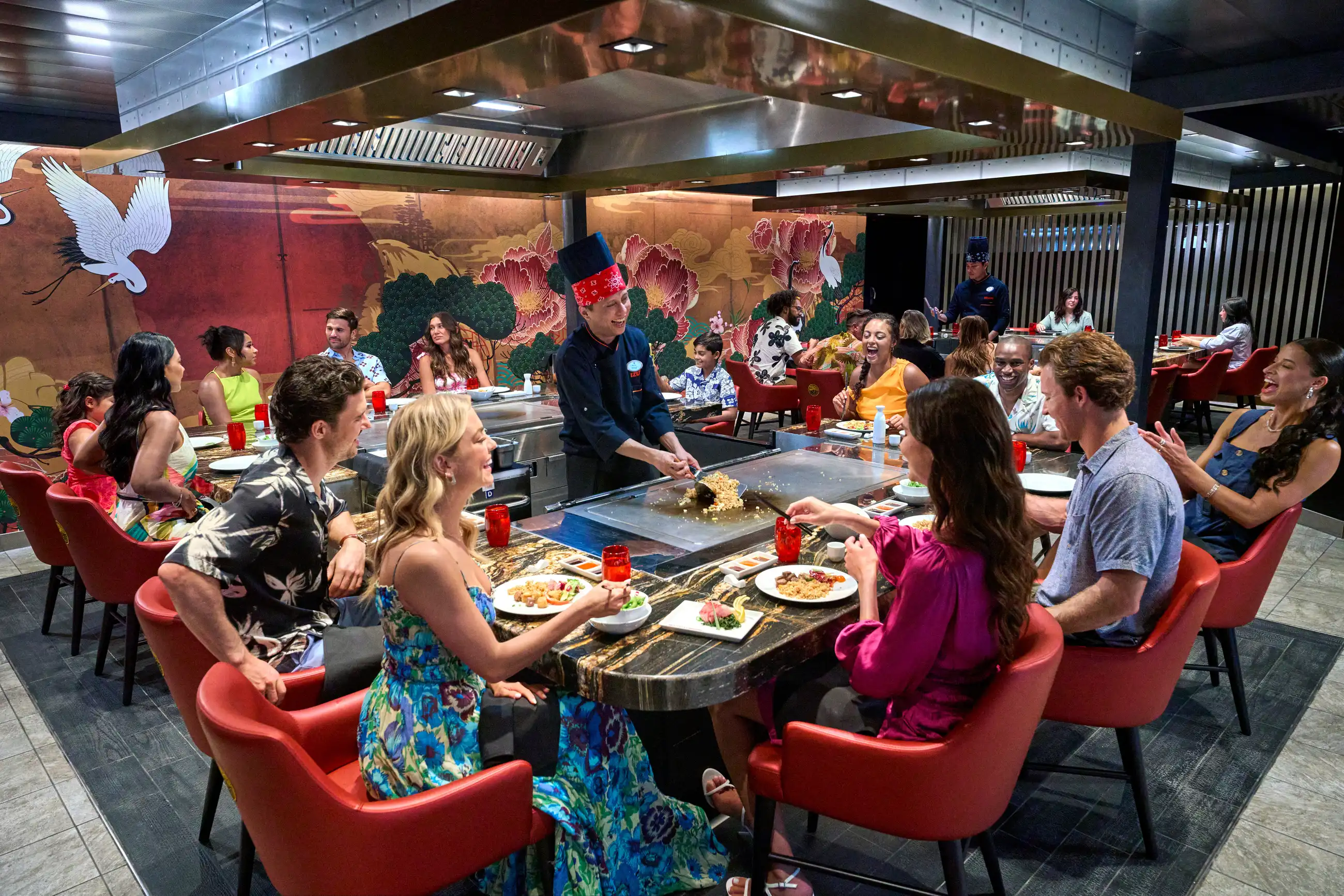
Izumi is Royal Caribbean's Japanese venue, and it comes in two forms depending on the ship: a sushi-and-sashimi restaurant, and a hibachi experience with tableside grills. The sushi side is excellent — fresh, well-prepared, with a menu that goes well beyond California rolls. But hibachi is the one that fills up fastest. The theatrical cooking, the communal seating, the sheer fun of it makes hibachi one of the hardest reservations to get on any ship that offers it. If hibachi appeals to you, book it the moment your Cruise Planner opens. Cover charges for the sushi side run around $45 to $55; hibachi tends to be slightly higher.
Wonderland Imaginative Cuisine is unlike anything else at sea. You receive a blank canvas and a paintbrush at your seat; wetting the paper reveals the menu. Dishes arrive with names like "Liquid Mushroom Risotto" and "Baby Vegetables in the Garden," and the presentation is as much performance as it is food. The flavours are genuinely creative, not just novelty for its own sake. This is not for everyone — if you want a straightforward steak dinner, this is the wrong room. But if you are open to something playful, Wonderland is the specialty restaurant most likely to be the highlight of your trip. Available on Oasis-class, Quantum-class, and select other ships. Cover charges range from $49 to $65.
150 Central Park, available on Oasis-class ships, is the most upscale dining experience Royal Caribbean offers. The restaurant faces the open-air Central Park neighbourhood, the menu changes seasonally, and the cooking is genuinely refined — closer to a fine dining restaurant on land than to anything else onboard. Cruisers on Reddit and Cruise Critic consistently describe 150 Central Park as a level above the other specialty venues, and the price reflects that. Cover charges land between $65 and $75 per person as of mid-2026. This is the one to book for an anniversary dinner or a night when you want the evening to feel polished and quiet.
On newer ships — Icon of the Seas, Star of the Seas — Royal Caribbean has added immersive supper club concepts like Empire Supper Club and Hollywoodland Supper Club. These blend live entertainment with multi-course dining, so the meal becomes a show in its own right. Early feedback from cruisers is mixed on whether the food matches the spectacle, but the experience itself is unlike a standard restaurant evening. Go for the atmosphere rather than expecting a purely culinary highlight.
A Few Venues That May Not Be Worth the Spend
Honesty matters here, because every specialty dinner is money you could spend on a shore excursion, a drink package, or simply keep in your pocket.
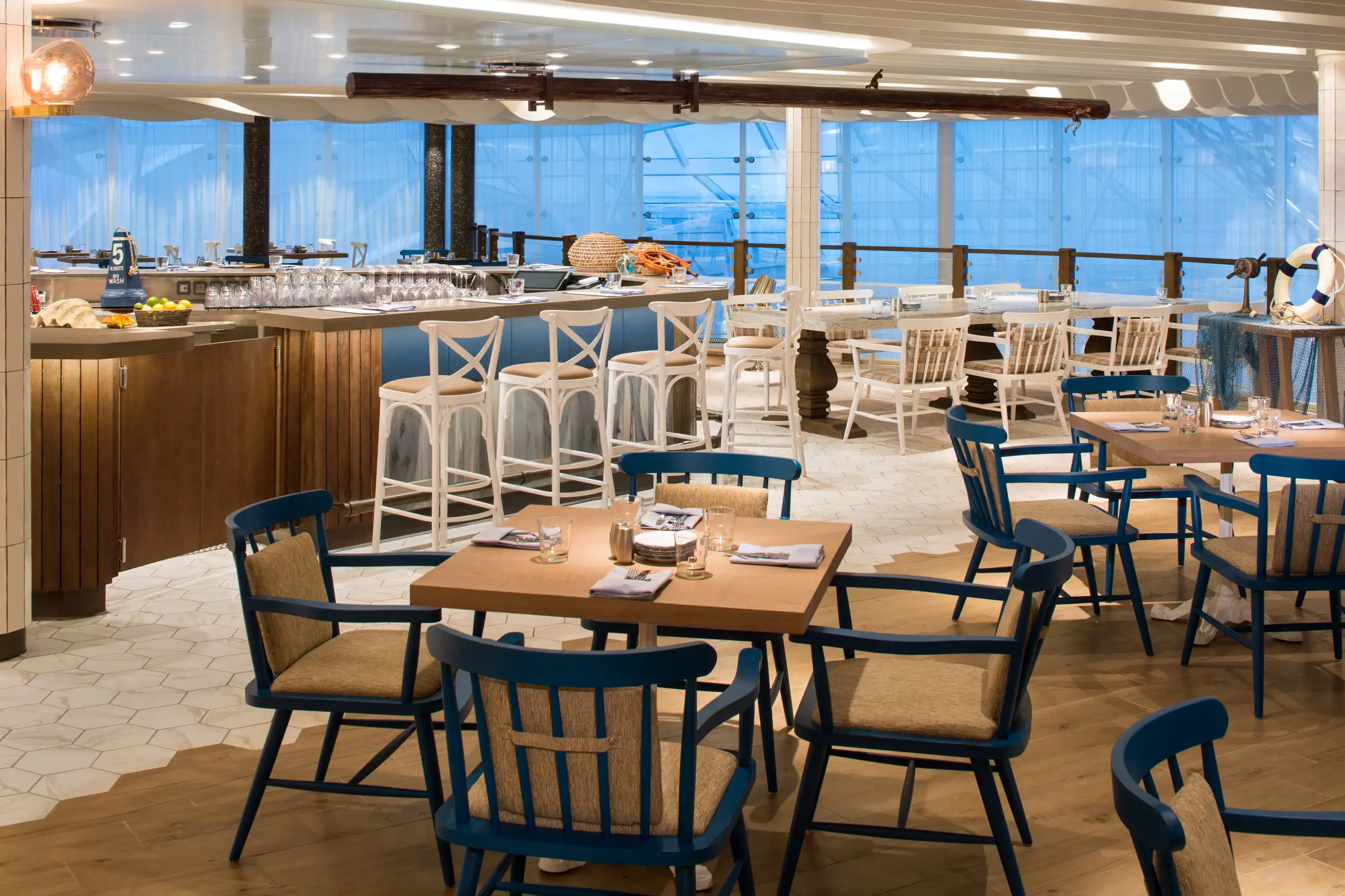
Hooked Seafood, available on some Oasis-class ships, draws mixed reactions. If you love shellfish — lobster, crab, shrimp — the menu has plenty to work with. But if shellfish is not your thing, the remaining options may not feel distinct enough from what the Main Dining Room offers on its own seafood night. Travel writer Matt Hochberg, who cruises on Royal Caribbean frequently, has been open about the fact that Hooked does not work for him, though he notes it is partly because he does not eat shellfish. If you do, your experience may differ.
Playmakers Sports Bar and Arcade is technically listed as a specialty dining option on some packages, and while the wings and burgers are fine, this is a sports bar — not a dining experience in the way that Chops or Giovanni's is. Using a Playmakers meal as one of your specialty dining nights on a package can feel like a missed opportunity when you could have spent it at a full-service restaurant.
The broader principle: before booking any specialty restaurant, look at the actual menu on Royal Caribbean's website or the app. Every venue posts its menu in advance. Five minutes of reading will tell you whether the offerings justify the cover charge for your particular tastes.
When a Dining Package Saves You Money — And When It Does Not
Royal Caribbean offers two primary specialty dining packages, both purchased through the Cruise Planner before your sailing: a 3-Night Dining Package and an Unlimited Dining Package. According to Royal Caribbean's own pricing, both can deliver savings of up to 40% compared to booking individual cover charges — but the real question is whether the package matches how you actually want to eat.
The 3-Night Package gives you three specialty dinners during your cruise. You choose which restaurants and which nights. On a seven-night sailing where you want to try Chops, Giovanni's, and Izumi without committing to specialty dining every evening, this is the sweet spot. You get variety, you save versus booking each restaurant separately, and you still have nights free for the Main Dining Room, the Windjammer, or room service. For first-time cruisers on a standard seven-night itinerary, this package delivers the best balance of value and flexibility.
The Unlimited Dining Package does exactly what it says — specialty dining every night of your cruise, plus lunch at specialty restaurants on sea days. On a seven-night sailing, eating specialty every evening would cost roughly $300 to $450 per person at individual cover charges. The Unlimited package typically runs well below that total, and the sea day lunches — especially at Izumi — are a genuine bonus many cruisers do not realise is included until they have the package. It also includes a discount on wine purchases at specialty venues.
Here is the counterpoint: the Unlimited package is not the right choice for everyone. If you are sailing with a large family group that wants to eat together most nights, and the Main Dining Room is where the group naturally gravitates, you will likely use the unlimited package three or four times at most — and the 3-Night package would have been cheaper. On a short sailing of four or five nights, the maths shift quickly because there are fewer nights to spread the cost across. And if your ship has only two or three specialty restaurants, you may find yourself repeating venues, which dulls the appeal.
The deciding question is simple: do you think you will eat at a specialty restaurant more than three times during your sailing? If yes, the Unlimited package almost certainly saves money. If you are unsure, the 3-Night package gives you room to enjoy specialty dining without overcommitting. And if you only want one special evening — an anniversary dinner at 150 Central Park, for instance — booking that single restaurant at its individual cover charge is perfectly fine. The packages reward people who know they want more; they are not a prerequisite for enjoying specialty dining at all.
Booking, Timing, and the Things Most People Learn Too Late
Cover charges on Royal Caribbean specialty restaurants use dynamic pricing — the same restaurant on the same ship can cost different amounts depending on when you book and how full the sailing is. Booking through the Cruise Planner before your sailing date typically locks in a lower price than waiting until you are onboard. This is especially true for popular restaurants like Izumi hibachi, which can sell out entirely weeks before departure.
The moment your Cruise Planner opens — usually several months before sailing — is the best time to book. This is not manufactured urgency. Restaurants with limited capacity and high demand genuinely do fill up. If you board the ship hoping to grab a hibachi reservation that evening, you may find nothing left. Some cruisers report success checking the restaurant's host stand on embarkation day for cancellations, and spots do open up. But if there is a specific restaurant you have your heart set on, book early.
Gratuities catch some first-time specialty diners off guard. Royal Caribbean's daily service charge covers gratuities for the Main Dining Room, Windjammer, and other included dining — but at specialty restaurants, an automatic gratuity of 18% is added to your cover charge separately. You can adjust this at Guest Services if you wish, but expect it to appear on your onboard account. Tipping beyond the automatic gratuity is entirely at your discretion.
Children ages six to twelve receive discounted pricing at specialty restaurants, which makes a family dinner more accessible than adult cover charges suggest. Kids under six eat free at most venues. If you are considering a family night at Chops or Giovanni's, the per-person cost for your table is lower than the headline number implies.
One more detail that surprises people: you can eat at specialty restaurants for lunch on sea days, even without the Unlimited package, by paying a separate cover charge. The lunch menus are often shorter and the pricing lower, and the restaurants are typically quieter. A sea day lunch at Izumi — unhurried sushi in a half-empty room — is one of the better-kept pleasures on a Royal Caribbean ship.
Quick FAQ
Quick-reference answers drawn from the full guide above.
Do all Royal Caribbean ships have the same specialty restaurants?
Are specialty dining prices fixed or do they change?
Which dining package option is available?
Is a dining package always a good deal?
Are there specialty restaurants that aren't worth the extra cost?
Can I have a great cruise without specialty dining?
When should I make my specialty dining reservations?
 Blog guide
Norwegian Aura Update: Everything New — and Everything Already Announced
NCL has detailed Norwegian Aura's dining and wellness program. Here is what is genuinely new — including The Panorama Room…
 Blog guide
MSC World Atlantic: Every Confirmed Detail — Specs, Dining, Entertainment, and What's Still Unknown
Full preview of MSC World Atlantic — confirmed specs, all 13 dining venues, 20-plus bars, entertainment, cabin categories,…
 Blog guide
Isla Tropicale: What Carnival's Private-Island-Style Port Actually Offers
Planning a cruise to Carnival’s Isla Tropicale in Roatán? See what changed from Mahogany Bay, including Mangrove Bay, the…
 Blog guide
Carnival's Ace Class: What We Know, What We Don't, and What Carnival Destiny Means for Cruisers
A complete guide to Carnival’s Ace Class and Carnival Destiny, covering confirmed details, expected features and what remains unknown.
 Blog guide
Port Canaveral and Galveston Are Getting Bigger — Here's What That Means for Your Next Cruise
Port Canaveral is doubling Terminal 5 as part of a $1B plan. Galveston approved a $2.4B master plan with three new…
 Blog guide
Royal Caribbean's Discovery Class: What We Know, What We Don't, and What It Means for Your Next Cruise
Royal Caribbean's Discovery Class ships arrive in 2029. Here's what is confirmed, what is still unknown, and who these new…
Browse Royal Caribbean sailings
Specialty dining menus, pricing, and package availability vary by ship and sailing date.