




Carnival's Ace Class: What We Know, What We Don't, and What Carnival Destiny Means for Cruisers


Carnival's Ace Class: What We Know, What We Don't, and What Carnival Destiny Means for Cruisers
A 230,000-ton ship carrying 8,000 guests with 70% new venues — here is what is confirmed and what is still missing.
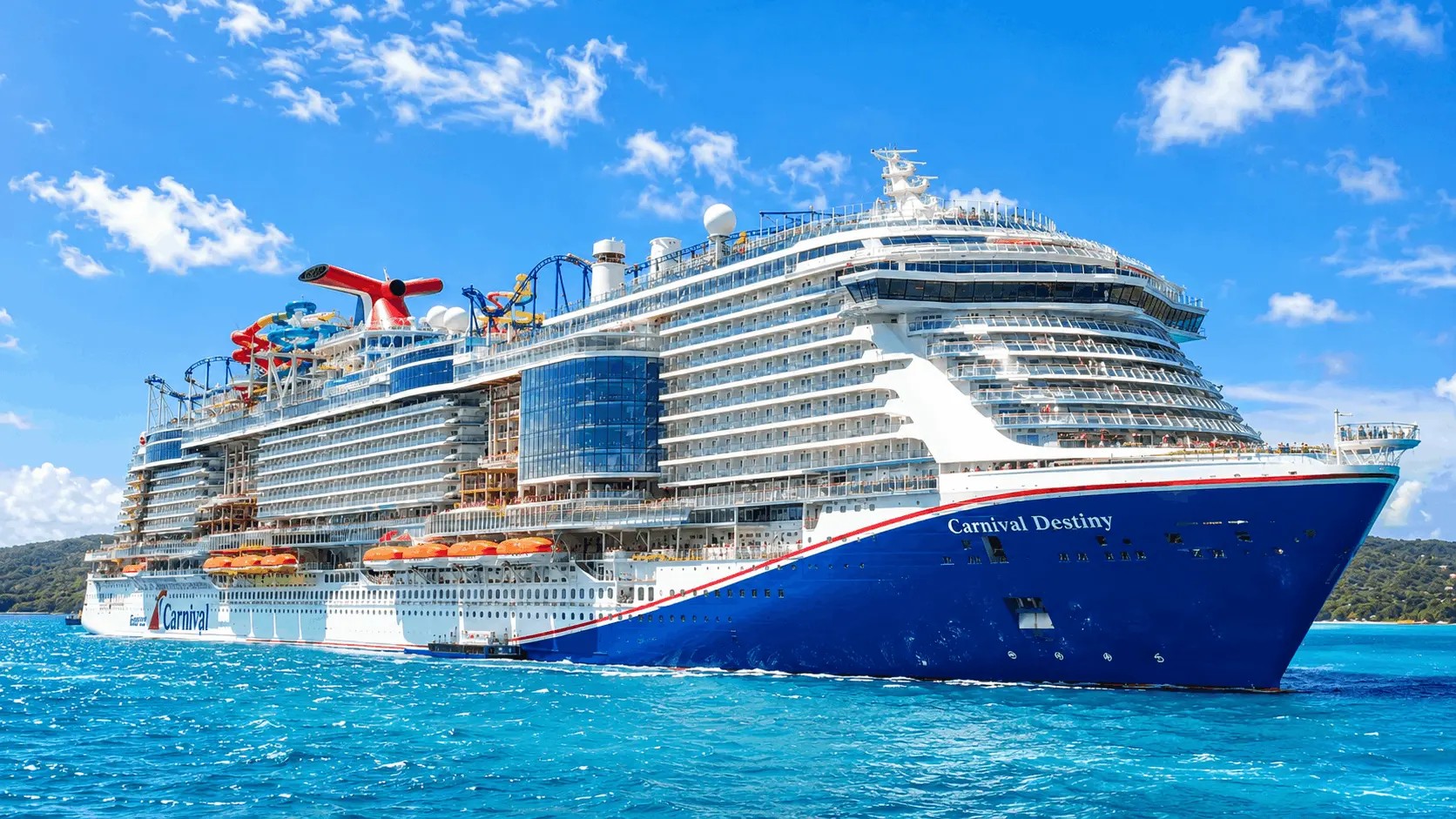
Carnival Ace Class's Destiny Ship Rendering
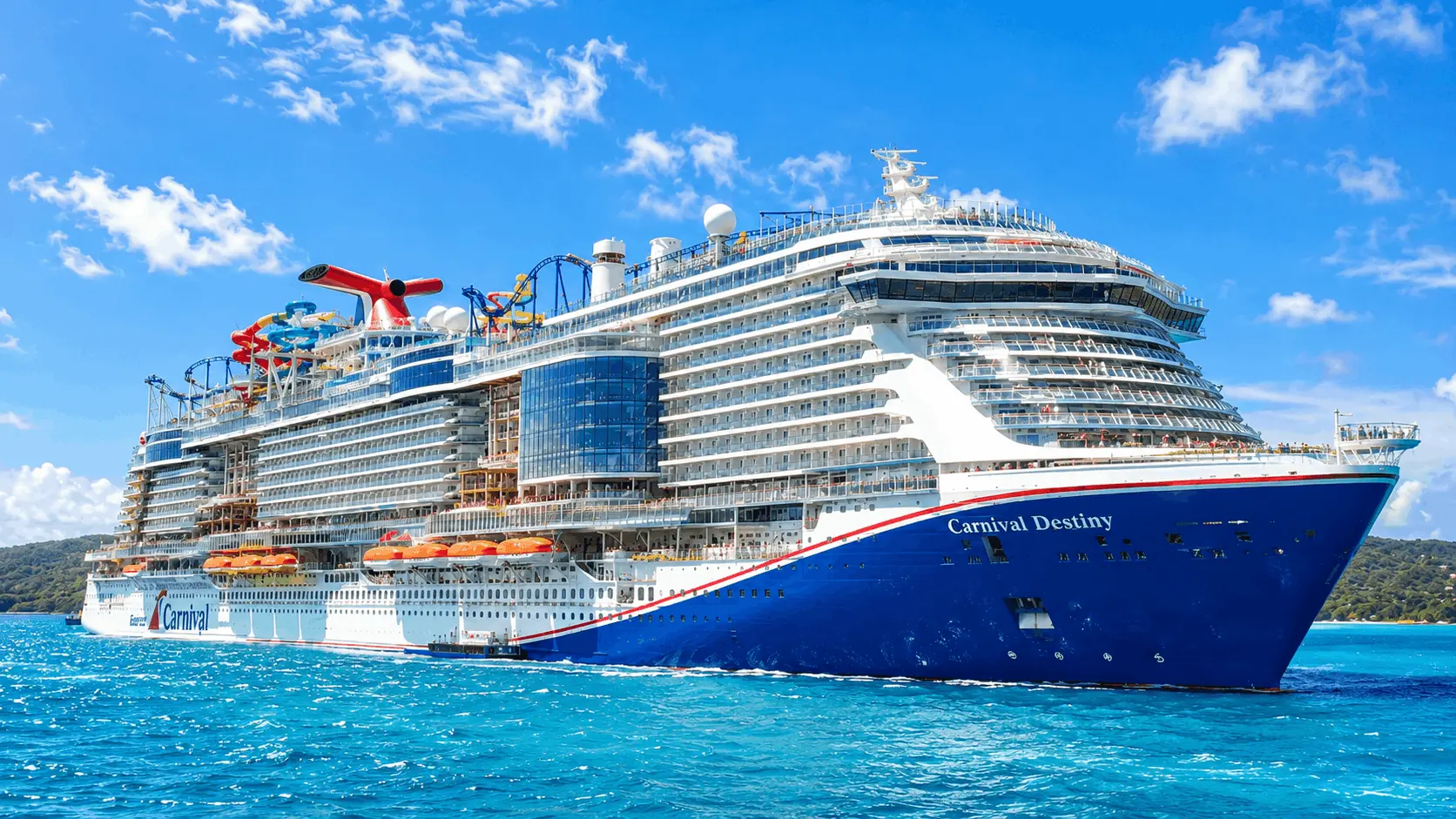
Carnival Destiny is the largest ship Carnival Cruise Line has ever announced, the first of a new Ace Class, and it is scheduled for summer 2029. Steel was cut at Fincantieri's Monfalcone shipyard on July 10, 2026. The early specs are genuinely striking — roughly 230,000 gross tons, nearly 8,000 guests at maximum capacity, more than 4.5 acres of glass, and a commitment that over 70 percent of the onboard venues will be entirely new to the cruise line.
Those numbers are exciting. They are also, if you read carefully, surrounded by a lot of empty space. No homeport confirmed. No specific itineraries. No deck plans. No pricing. No detail on what those new venues actually are. This piece separates what Carnival has confirmed from what remains unknown, and walks through what these early facts mean for the people who will eventually decide whether to book.
What cruisers want to know about Carnival Destiny
The Ace Class announcement packed in headline numbers but left gaps. These are the questions readers are asking first.
Q1How big is Carnival Destiny compared to current Carnival ships?
At roughly 230,000 gross tons, Carnival Destiny will be about 25 percent larger than the Excel-class ships such as Mardi Gras and Carnival Jubilee.
Q2How many passengers will Carnival Destiny carry?
The ship will carry nearly 8,000 guests at maximum capacity, placing it among the highest-capacity cruise ships afloat.
Q3When does Carnival Destiny debut?
Carnival has targeted a 2029 delivery. Specific maiden-voyage dates have not yet been announced.
Q4Where will Carnival Destiny sail?
Confirmed itineraries cover the Caribbean, Bahamas, and Mexico under the Paradise Collection umbrella.
Q5What does 70 percent new venues mean?
More than 70 percent of the onboard venues and attractions will be concepts that have never appeared on a Carnival ship before. The remaining spaces may carry over familiar names from the existing fleet.
Q6Will Carnival Destiny be the largest cruise ship in the world?
No. At 230,000 gross tons it will rank among the largest ships afloat but will not surpass the current record holder. It will, however, be the largest ship ever built in Italy and the largest in the Carnival fleet.
What Carnival Has Actually Confirmed
The confirmed facts are specific enough to be useful, so start here. Carnival Destiny will measure approximately 230,000 gross tons — about 25 percent larger than the Excel-class ships (Mardi Gras, Carnival Celebration, and Carnival Jubilee), which top the current fleet at around 183,500 gross tons. The ship will carry nearly 8,000 guests at full capacity across more than 3,000 staterooms. A DNV Maritime filing puts the hull dimensions at 344.9 metres long and 47.5 metres wide.
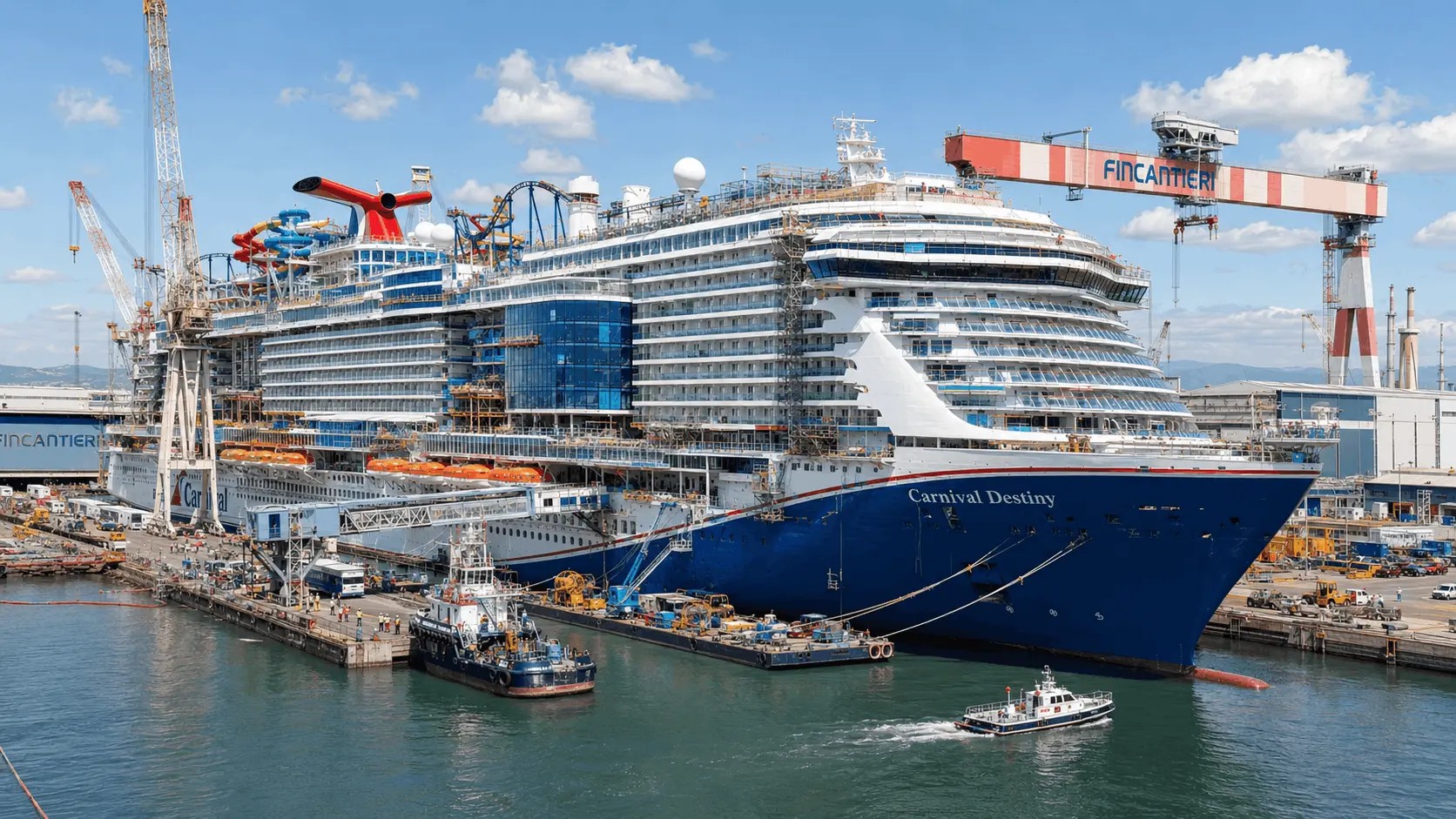
Fincantieri's Monfalcone yard is the same facility where the original Carnival Destiny was built in the mid-1990s. That ship — launched in 1996 — was the cruise industry's first vessel to exceed 100,000 gross tons. It was later refitted and renamed Carnival Sunshine. Carnival is reviving the name for what it describes as its most ambitious new-ship project to date.
Three Ace Class ships are on order: Carnival Destiny in 2029, with sister ships following in 2031 and 2033. Carnival has confirmed that Terminal F at PortMiami can accommodate Ace Class ships and that the vessels will be able to call at Celebration Key, the line's private destination in the Bahamas. All three ships will run on LNG.
Carnival has also confirmed Caribbean, Bahamas, and Mexico sailings under the Paradise Collection umbrella — the cruise line's portfolio of private and exclusive ports that currently includes Celebration Key, RelaxAway at Half Moon Cay, Isla Tropicale in Roatan, and Puerta Maya in Cozumel. Specific itineraries, sailing lengths, and homeport assignments remain unannounced.
The Design Shift: What "More Sea to See" Actually Looks Like
Carnival is calling the Ace Class the most outward-facing ship design at sea. The centrepiece of that claim is more than 4.5 acres of glass — including multi-storey glass walls — along with what Carnival describes as the largest number of ocean-view balcony cabins in its fleet. A reimagined Lanai deck is designed to create what Carnival calls a seamless connection between the ship and the water.
If you have sailed Carnival's Excel-class ships, you know they lean inward. The major entertainment and dining zones — the Grand Central atrium, the various themed areas that break up the ship — tend to focus your attention on the ship's interior rather than the ocean beyond it. BOLT, the roller coaster, is the most prominent outward-facing feature, but the overall layout pushes guests toward enclosed social spaces.
Ace Class appears to reverse that orientation. More glass, more balconies, more outdoor deck space that points you toward the water instead of away from it. If you have ever stood in a ship's atrium and thought, "I could be anywhere — a mall, a hotel — this doesn't feel like a ship," the Ace Class design philosophy is aimed directly at that feeling. Whether the execution delivers is something no one can evaluate until detailed renderings arrive and, eventually, the ship is built.
One practical note on balcony supply: a higher proportion of balcony cabins relative to total cabin count could shift the booking dynamic. Balcony cabins are the most requested category across the industry, and when there are more of them available, competition for that specific cabin type eases. That can translate to better availability during booking windows and, in some cases, softer pricing. This is a general pattern, not a Carnival-specific promise.
Seventy Percent New Venues: What That Means and What It Doesn't
The most intriguing detail in the announcement is that more than 70 percent of Carnival Destiny's venues and attractions will be entirely new concepts. Carnival has specified that the new-venue figure spans reimagined dining, next-generation bars and lounges, immersive entertainment, and new outdoor spaces.
That is a remarkable ratio. On Excel-class ships, Carnival carried forward most of its signature spots — Guy's Burger Joint, BlueIguana Cantina, the Alchemy Bar, Fahrenheit 555, the piano bar, the comedy club. Those spaces evolved and improved, but they were immediately recognisable to anyone who had sailed a Vista- or Dream-class ship. A 70-percent overhaul means Carnival Destiny will feel fundamentally different from anything in the current fleet.
The flip side: Carnival has not yet named a single one of those new venues. No restaurant concepts, no bar themes, no entertainment formats. The line has indicated that specifics will roll out later in 2026 and into 2027. So the number is a promise of ambition, not a preview of what is actually coming.
For loyal Carnival cruisers, the obvious question is which 30 percent survives. Online discussion is already active on this — plenty of fans want to know whether the Alchemy Bar, Guy's Burger Joint, or the RedFrog Pub make the cut. Carnival has not addressed this directly. If any of those venues are part of why you sail Carnival, it is worth tracking announcements as they come.
Eight Thousand Guests: Will It Feel Crowded?
Nearly 8,000 guests at maximum capacity is a number that makes people pause. It would make Carnival Destiny one of the highest-capacity cruise ships afloat.
But passenger count alone does not tell you how a ship feels. What matters is the space ratio — how much room, indoors and outdoors, exists per person. A ship with 8,000 guests and significantly more public space than a ship carrying 6,500 can actually feel less compressed than the smaller vessel. Carnival has not released deck plans or space-ratio data for Destiny, so this calculation is not yet possible.
One rough proxy: at 230,000 gross tons with roughly 8,000 maximum passengers, the gross tonnage per passenger is approximately 28.75. Carnival's Excel-class ships sit around 34 gross tons per passenger at max capacity. That suggests the Ace Class could feel denser — though gross tonnage measures the entire ship's enclosed volume, including engine rooms and crew areas, so it is only a rough guide to the amount of space guests actually occupy.
The real test will come in the design details. How many dining venues? How large are the pool areas? How well does the ship manage the flow of guests between zones? Excel-class ships handle flow reasonably well through their zone-based layout, which distributes people across distinct areas rather than funnelling everyone into shared corridors. If Ace Class builds on that approach — and the 70-percent new venue figure suggests there will be more venues to spread guests across — the headline capacity number may matter less than it sounds.
One thing that will not change with design: 8,000 guests will be noticeable at ports of call. Private destinations like Celebration Key are built to handle large ships, but smaller Caribbean ports can feel significantly more crowded when a vessel of this size arrives. If port-day experience matters to you, this is worth considering when itineraries are eventually announced.
Where Will It Sail — and What Is Still Open
Carnival has confirmed Caribbean, Bahamas, and Mexico sailings under the Paradise Collection umbrella. That is consistent with how the line deploys its largest ships — Excel-class vessels currently homeport in Miami, Port Canaveral, and Galveston, running Western and Eastern Caribbean itineraries with frequent calls at Carnival's private destinations.
Beyond that confirmation, nearly everything is open. No specific homeport has been named. Carnival's executive vice president of maritime and new builds, Ben Clement, confirmed that PortMiami's Terminal F can accommodate the Ace Class. Galveston's newer terminal was built for large vessels. Port Canaveral is getting a new terminal ahead of Carnival Festivale's arrival in 2027. Any of these are plausible, and Carnival may announce multiple homeports as the launch approaches.
Itinerary length is also unknown. Excel-class ships typically run 6- to 8-night Caribbean sailings. A ship of Destiny's size could support slightly longer itineraries, or Carnival could stay with the short-cruise model that drives its core business. Carnival president Christine Duffy has described the Ace Class vision in terms that suggest resort-style, drive-to-port, short-itinerary cruising — but nothing has been formalised.
Sailings are not yet open for booking. Based on past patterns — Excel-class ships opened for booking roughly 18 to 24 months before their debuts — you might expect bookings to open sometime in late 2027 or early 2028. That is an estimate based on precedent, not a commitment from Carnival.
How It Sits Next to Other Mega-Ships
At 230,000 gross tons, Carnival Destiny will not be the largest cruise ship in the world — but it will be comfortably in the mega-ship category, the largest ship ever built in Italy, and the largest in the Carnival Corporation global fleet.
The more relevant comparison for most cruisers is not tonnage but experience. The current generation of mega-ships from other lines uses a neighbourhood or zone model — self-contained areas with their own pools, dining, and entertainment. Carnival's Excel Class follows a similar logic. How the Ace Class builds on or departs from this model is one of the biggest unknowns, and how it feels to walk through the ship will ultimately matter more than any gross-tonnage comparison.
Pricing is another open question. Carnival has historically been the value leader among the major lines. If the Ace Class introduces significantly upgraded venues and experiences — and the 70-percent new figure suggests it will — the question is whether that upgrade comes with a noticeable price increase. Carnival has said nothing about pricing, and it is far too early to forecast. But if you value Carnival partly because of its affordability, this is a question worth watching as details emerge.
Other lines have their own next-generation projects in the pipeline, some heading in a different direction — somewhat smaller ships with distinct design priorities. The major lines appear to be diverging rather than all chasing the same scale, which could give cruisers meaningfully different options by the end of the decade.
Before you board
A Checklist of What Is Still Missing
There is enough substance in the announcement to justify the attention Ace Class is getting. There are also enough gaps to warrant patience before making any decisions. Here is what remains unannounced as of mid-July 2026:
Homeport and specific itineraries. Sailing lengths and departure dates. A date when bookings open. Detailed deck plans and cabin category breakdowns — how many interior, ocean view, balcony, and suite cabins. Specific dining venues, bar concepts, and entertainment offerings. Whether signature Carnival venues like the Alchemy Bar, Guy's Burger Joint, or Playlist Productions will appear on Destiny. The ship's water park or top-deck attraction layout. Crew-to-guest ratio and service staffing details. Pricing structure and whether Ace Class sailings will carry a premium over Excel Class.
Carnival has said that more details will come later in 2026 and into 2027. That timeline is consistent with past launches — Mardi Gras, the first Excel-class ship, saw its venue reveals and deck plans roll out gradually over roughly two years before its 2021 debut.
If you are seriously interested in an early booking, two practical steps are available now: make sure your VIFP loyalty status is current, and stay connected with a travel advisor who can flag you when bookings open. Carnival has historically given loyalty members and travel advisors early access to new ship bookings before the general public.
Quick FAQ
Quick-check answers drawn from confirmed details as of the latest Carnival announcement.
How big is Carnival Destiny compared to current Carnival ships?
When is the ship expected to debut?
What does the 70 percent new-venues figure actually cover?
Will Carnival Destiny be the world's largest cruise ship?
Where will she sail?
Should I expect it to feel crowded with 8,000 guests?
What key details are still missing?
 Blog guide
What You Can and Can't Bring onto a Cruise Ship
A complete guide to prohibited and allowed items on cruise ships, from alcohol and electronics to the fire-hazard items that…
 Blog guide
Is Southampton Really the Cruise Capital of Europe?
Southampton handles 3 million+ cruise passengers yearly from 45+ ships. Learn which cruise lines sail from here, what…
 Blog guide
Holland America Is Going Year-Round in Europe — Here's What That Actually Means for You
Holland America is keeping two ships in Europe year-round starting 2027. Here's what that means for itineraries, pricing,…
 Blog guide
Knicks Finals Tickets vs. a Summer Cruise: The Math Is Embarrassing
Knicks Finals tickets cost $3,700+ each. For the same money, a family of four can cruise to Bermuda from New York for a full…
 Blog guide
Cruises from New York to Bermuda: What to Know Before You Book
Everything you need to know about cruising from New York to Bermuda — itineraries, timing, costs, what to do on the island,…
 Blog guide
Royal Caribbean's Discovery Class: What We Know, What We Don't, and What It Means for Your Next Cruise
Royal Caribbean's Discovery Class ships arrive in 2029. Here's what is confirmed, what is still unknown, and who these new…