




What it's like
Totem Bight sits on the site of a traditional Native campground once known as Mud Village and Mud Bight Village. The park's totem poles were placed by a Civilian Conservation Corps project, and most of them are replicas of 19th-century poles.
A visit is a walk through the poles and a look at the replica chieftain's house, with its low oval entrance into a square chamber, a central fire pit and carved house posts. Its carvings were made by Charles Brown, a Tlingit carver from Saxman. Allow time to read the displays on keeping traditional art alive.
Good to know
- Ketchikan is one of the rainiest cities in North America, so bring rain gear for the walk among the poles.
- The Gold line bus is free from May through September, so plan the return trip around its schedule.
- Summer rain is usually light and sporadic, with daytime highs in the high sixties.
Totem Bight State Historical Park
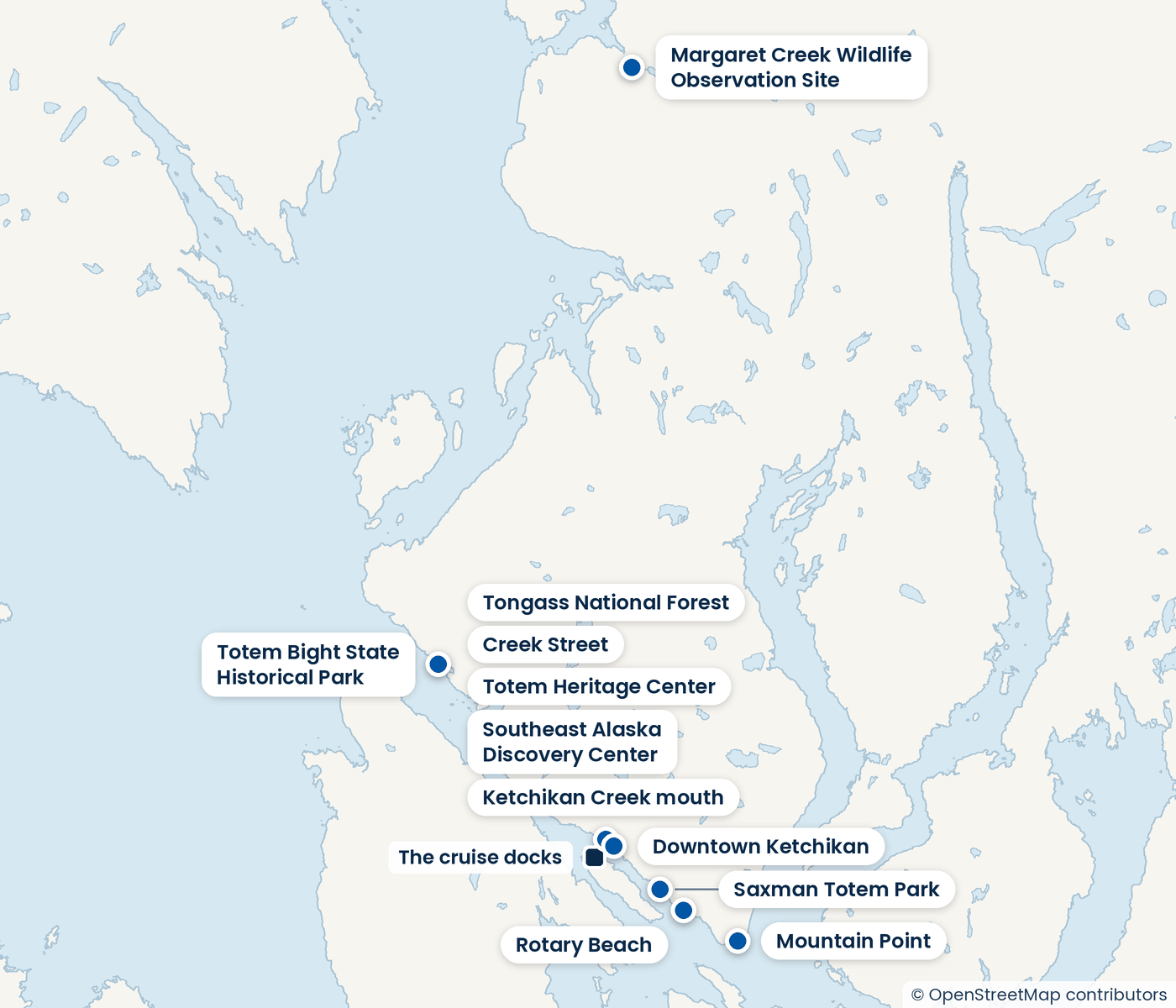
Totem Bight State Historical Park is a 33-acre state park on the ocean about 10 miles north of Ketchikan. It holds a collection of totem poles and a replica of a traditional chieftain's house.
Tours that go here
Prices are per person, booked with our partner, Shore Excursions Group.


Totem Heritage Center
Totem Heritage Center is a museum at 601 Deermount Street that holds one of the world's largest collections of unrestored 19th-century totem poles. Visitors also see Tlingit, Haida and Tsimshian art and watch carvers at work.

Saxman Totem Park
A public park in the city of Saxman, just south of Ketchikan, with a collection of totem poles. Many poles came from abandoned Tlingit villages in the region.

Creek Street
Creek Street is a wooden boardwalk built on stilts above Ketchikan Creek, the most scenic stretch of downtown. Shops, galleries and old brothel buildings line the walk.

Downtown Ketchikan
Downtown Ketchikan is a compact historic district of wooden storefronts, galleries and shops, easy to cover on foot. It is the town's main place to browse on foot.
The same kind of day, elsewhere
Ancient sites


