




What it's like
Fontein Cave is a limestone cave with brownish-red pictographs probably left by the Arawak tribe. The Caquetio, the Arawak people who lived on Aruba, made the drawings on the ceiling. Later European wall art has also been found inside the cave.
A visit is simple. The cave is shallow, and a park guide is usually at the entrance to point out the drawings. It is an easy stop near San Nicolas, and a regular car is enough to get there.
Good to know
- A park guide is usually at the entrance to explain the drawings.
- A regular car is enough to reach the cave, so no jeep is needed.
- Some unmarked bus-only roads have large pits meant to trap normal cars; stick to marked roads.
Fontein Cave
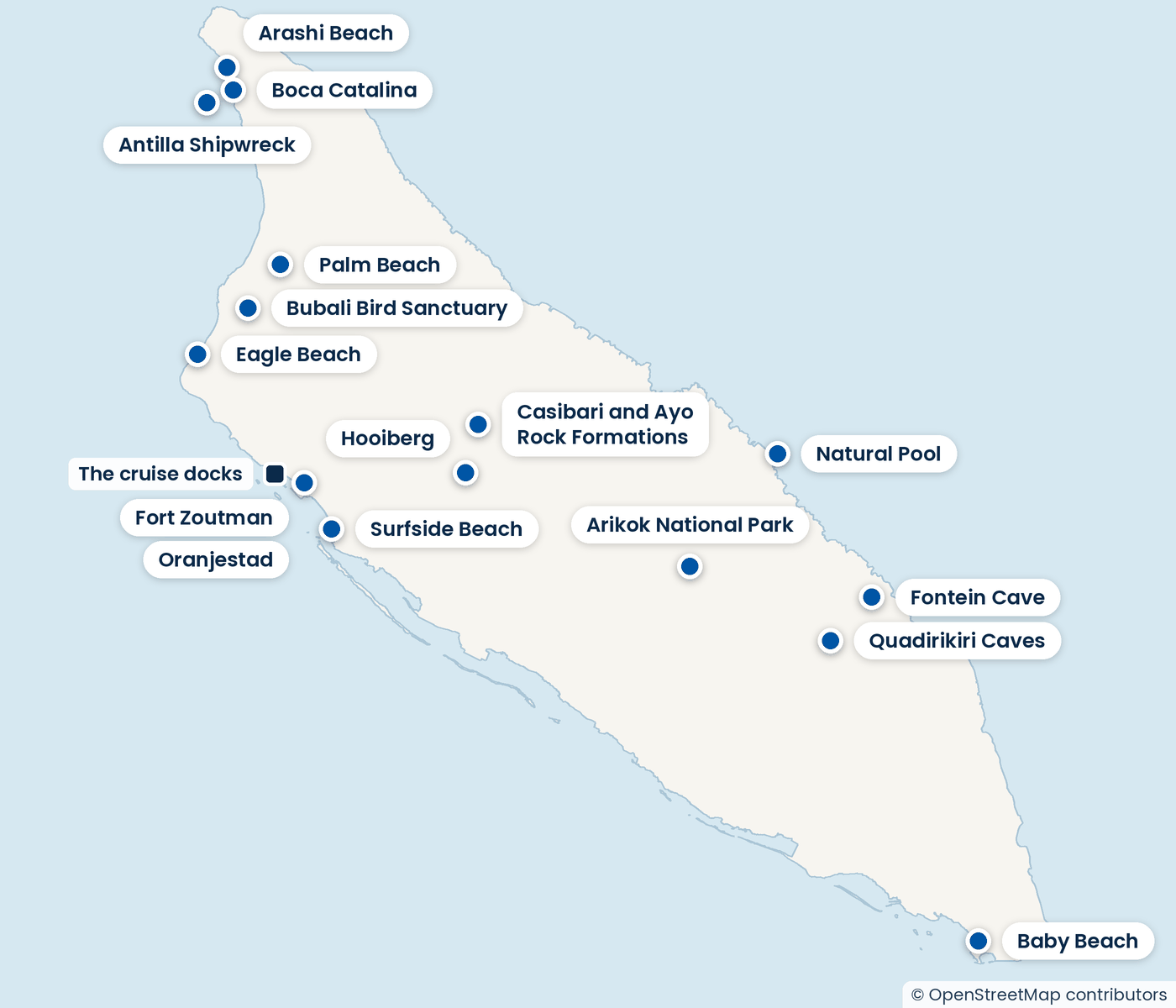
Fontein Cave is a shallow limestone cave on Aruba's northwest side, known for reddish-brown rock drawings made by the Caquetio, the Arawak people who lived on the island. A visit is short and mostly about looking up at the ceiling.
Tours that go here
Prices are per person, booked with our partner, Shore Excursions Group.

Arikok National Park
Arikok National Park is Aruba's large wild reserve, covering about a fifth of the island on the rugged east side. Its dry trails, caves, old gold ruins and limestone cliffs make it the place for hiking and wildlife on land.

Quadirikiri Caves
Limestone caves inside Arikok National Park, reached by back roads on jeep tours. Two chambers open to the sky, with stalactites, bats and Amerindian petroglyphs nearby.

Casibari and Ayo Rock Formations
Casibari and Ayo are clusters of giant boulders inland in Aruba, near Hooiberg. Visitors climb the rocks and paved paths lead to the tops for views across the island.

Eagle Beach
Eagle Beach is a long, wide stretch of soft white sand on Aruba's west coast, with wind-bent fofoti trees, palapas and calm water for swimming. It is one of the island's best-known beaches.
The same kind of day, elsewhere
Caves and cenotes


