




What it's like
Casibari and Ayo are clusters of giant boulders set in the flat inland of Aruba, close to Hooiberg, the rounded hill that stands out in the landscape. The rocks are the island's most striking natural formations away from the coast. Ayo holds Arawak petroglyphs, carved by the island's early people.
A visit means climbing. Paved paths and steps lead up among the boulders to the tops, where the views run across the countryside. Many people combine a stop here with Hooiberg, the nearby hill, or with the Arikok area to the east.
Good to know
- Wear shoes with good grip, since the rock surfaces are uneven where the paths give way to boulders.
- Some unmarked bus-only roads have large pits designed to trap ordinary cars, so keep to marked roads when driving.
- Taxis are available at the airport and hotels, so a car is not strictly needed to reach the area.
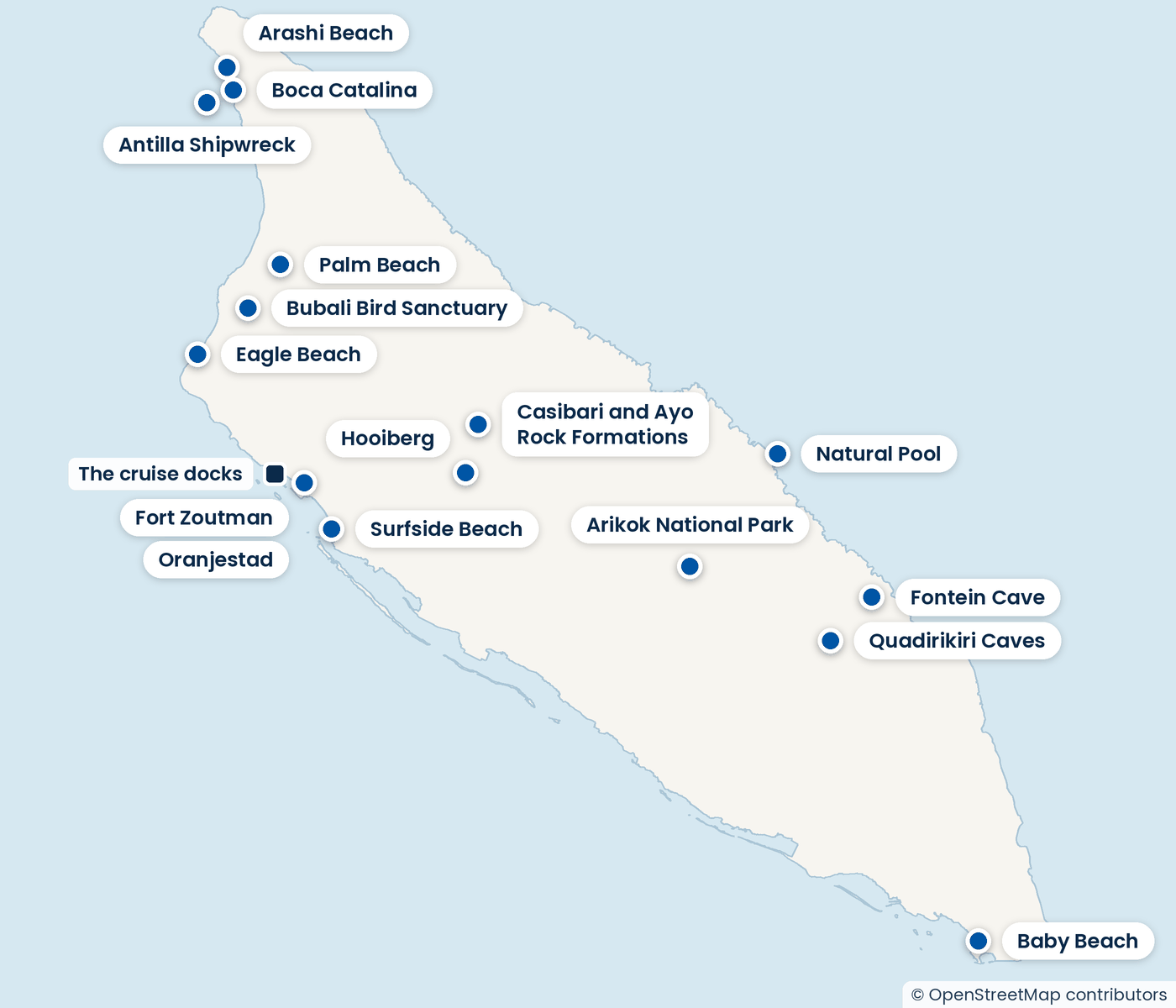
Casibari and Ayo Rock Formations
Casibari and Ayo are clusters of giant boulders inland in Aruba, near Hooiberg. Visitors climb the rocks and paved paths lead to the tops for views across the island.
Tours that go here
Prices are per person, booked with our partner, Shore Excursions Group.


Hooiberg
Hooiberg is a conical hill in the center of Aruba, rising 165 meters above the flat land. Visitors climb 561 steps to the top for wide views over the island.

Arikok National Park
Arikok National Park is Aruba's large wild reserve, covering about a fifth of the island on the rugged east side. Its dry trails, caves, old gold ruins and limestone cliffs make it the place for hiking and wildlife on land.

Natural Pool
Conchi, also called the Natural Pool or Cura di Tortuga, is a small saltwater tide pool on Aruba's wild north coast. You reach it inside Arikok National Park, across rough volcanic rock.

Quadirikiri Caves
Limestone caves inside Arikok National Park, reached by back roads on jeep tours. Two chambers open to the sky, with stalactites, bats and Amerindian petroglyphs nearby.
The same kind of day, elsewhere
Hiking


