



What it's like
The Byzantine Walls of Thessaloniki are a UNESCO World Heritage site. The city was founded by Cassander, and the walls were built after that. They were reworked in 390 AD under Theodosius I, and the northernmost walls and parts of the eastern walls still stand.
A visit means walking the old fortifications uphill from the city center. The Acropolis sits within the walls, and a large cistern there once supplied the city with water. The White Tower, the city's symbol, stands nearby and is one of the main sights of the city.
Good to know
- Plan on uphill walking, so wear comfortable shoes.
- Entrance to the Byzantine churches is free except for the Rotunda, which charges a fee.
- The Tourist Information Center is at Tsimiski 136 at Aristotelous Square, closed on Sundays.
Byzantine Walls of Thessaloniki
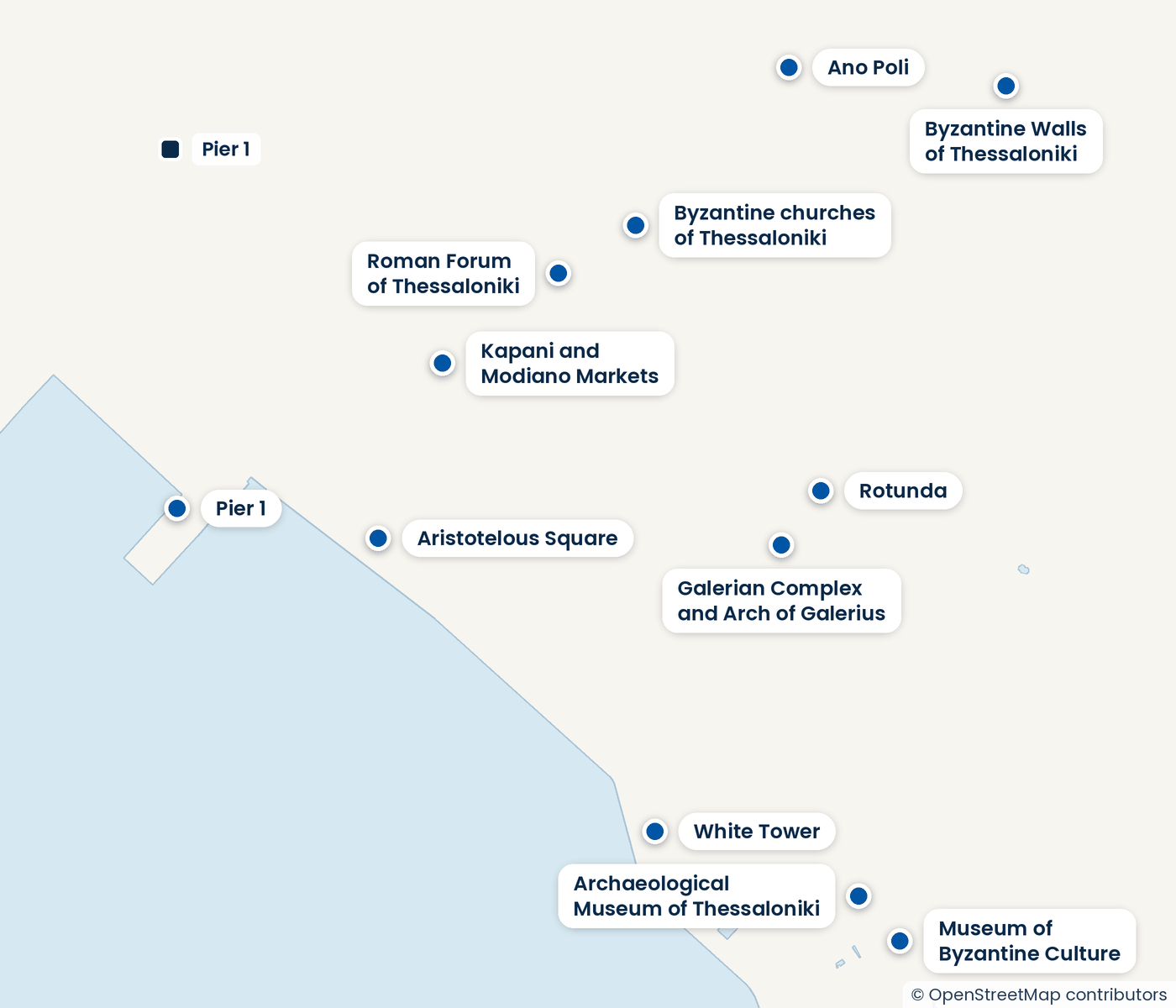
The Byzantine Walls run uphill from the center of Thessaloniki, with the Acropolis and the Heptapyrgion along the way. You walk the old fortifications on foot.
Tours that go here
Prices are per person, booked with our partner, Shore Excursions Group.

Private Ancient Thessaloniki Acropolis, Museums and Landmarks Drive and Walk

Ano Poli
Ano Poli, the Upper City, is a medieval hillside quarter of narrow stone-paved streets climbing toward Mount Chortiatis. It is a place to wander on foot, with the old city feel most of the way up.

Byzantine churches of Thessaloniki
A cluster of UNESCO-listed Byzantine churches in the city center, including Agia Sophia, Agios Dimitrios and the Rotunda. Most are free to enter.

Rotunda
The Rotunda stands on St. George Square in central Thessaloniki. It began as a Roman temple and later became a Christian church, so one building holds both periods.

Aristotelous Square
Aristotelous Square is the open heart of Thessaloniki, a broad square where the city gathers for festivals and seasonal celebrations. It is the starting point for much of the old center.
The same kind of day, elsewhere
Old town and historic sights