




What it's like
The western reef runs along the protected side of Bonaire, the island's leeward coast. Bonaire is known as one of the top shore-diving places in the world.
Coral restoration dives are offered here as well, through several dive operators.
Good to know
- Booties are recommended for the rough shore entry.
- Gloves, chemical glow sticks and spearfishing are banned in the marine park.
- The marine park fee is per person, valid one year, and can be paid at any dive shop or online.
- Dive sites on the western coast are usually marked by a painted yellow rock or a mooring.
Bonaire western reef
A protected reef along Bonaire's western shore, where divers wade in from the beach in front of their hotel. Divers can walk in from the sand in front of their hotel and start the dive there.
Tours that go here
Prices are per person, booked with our partner, Shore Excursions Group.

Bonaire National Marine Park
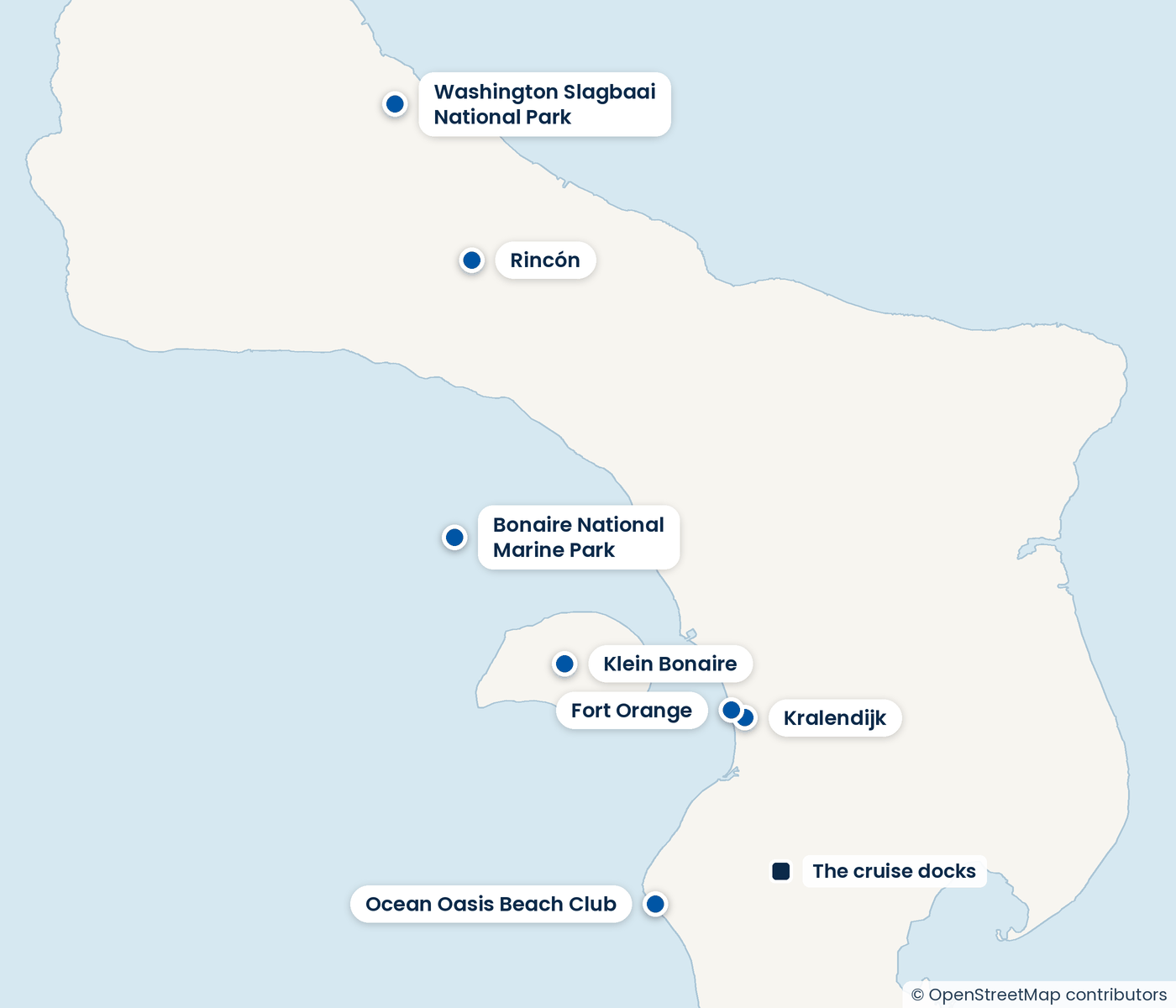
Bonaire National Marine Park is the protected sea around the island and Klein Bonaire, home to reefs, shallow lagoons and 86 public dive sites. Most of the diving and snorkeling happens here.

Klein Bonaire
Klein Bonaire is a small uninhabited islet about 800 meters off Bonaire's west coast. It is a marine preserve, and people come for the snorkeling, the turtles and the beach.

Bonaire shore snorkel sites
Bonaire's shore snorkel sites are reef spots you enter straight from the land, with no boat needed. Over thirty are open year-round, and many are led by experienced guides.

Washington Slagbaai National Park
Washington Slagbaai National Park is a wild reserve covering most of Bonaire's north. Visitors drive rough dirt roads past salt pans, blowholes and bird spots, with flamingos and the endemic Lora parrot among the wildlife.
The same kind of day, elsewhere
Scuba diving


Fort Zachary Taylor Historic State Park

