
Flying to Your Cruise Port: The Real Tradeoffs Nobody Talks About Until It's Too Late

April 1, 2026
A wide editorial travel photograph of a modern airport departure terminal with large floor-to-ceiling windows overlooking the tarmac, with a large cruise ship visible in the distant harbor beyond the A wide editorial travel photograph of a modern airport departure terminal with large floor-to-ceiling windows overlooking the tarmac, with a large cruise ship visible in the distant harbor beyond the

Cruise Planning

Flying to Your Cruise Port: The Real Tradeoffs Nobody Talks About Until It's Too Late
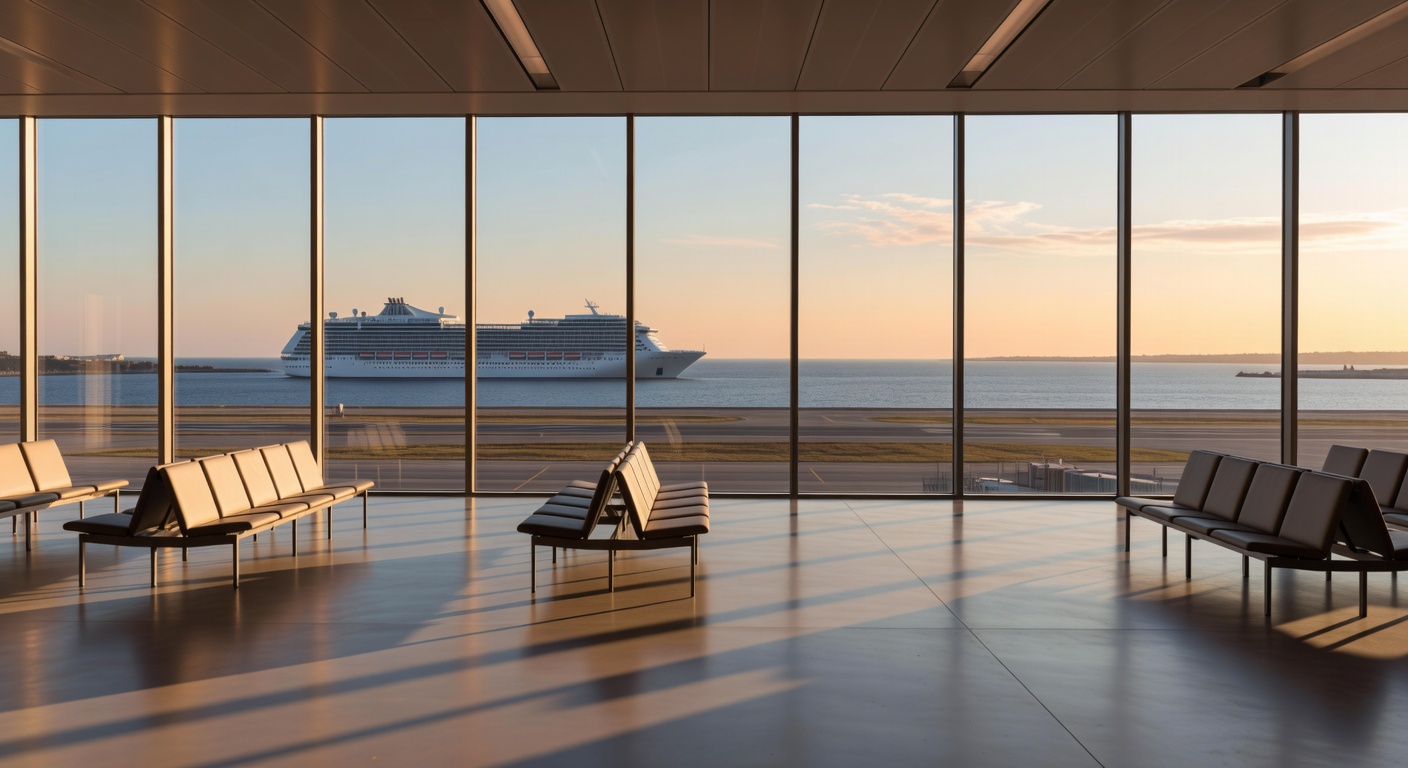
More itineraries open up when you're willing to fly — but so do more ways for things to go sideways. Here's how to weigh the decision honestly.

A wide editorial travel photograph of a modern airport departure terminal with large floor-to-ceiling windows overlooking the tarmac, with a large cruise ship visible in the distant harbor beyond the

A wide editorial travel photograph of a modern airport departure terminal with large floor-to-ceiling windows overlooking the tarmac, with a large cruise ship visible in the distant harbor beyond the

Your cruise departs from Fort Lauderdale at four in the afternoon. You live in Minneapolis. That single fact — the distance between your front door and the gangway — shapes more of your holiday than the ship itself, the cabin you booked, or which shore excursions you circled in the brochure. And yet most first-time cruisers spend hours agonising over balcony versus ocean-view and about five minutes deciding how to get to the port.

Whether to fly or drive to your embarkation city is one of those fork-in-the-road decisions that touches everything: cost, stress, luggage, timing, and which itineraries are even on the table. The upside of flying is obvious — the whole world opens up. The downside is less obvious until it happens to you: a cancelled connection, a suitcase circling a carousel in the wrong city, and a ship pulling away from the dock without you on it.

There is no universal right answer here. It depends on where you live, where the ship sails from, how much schedule risk you can stomach, and how you value your time. What follows is an honest look at both sides — the parts that work, the parts that can go wrong, and the one planning move that changes the entire equation.

The Upsides of Flying
The World Opens Up Flying unlocks far more itineraries than driving ever could.

Access Any Port Reach major embarkation cities regardless of where you live.

Cost Can Balance Out Flights may cost less than you'd spend driving long distances.

Pre-Cruise Buffer Day Arriving early turns flight risk into a manageable non-issue.

Expanded Itinerary Choices Exotic and international departures become genuinely viable options.
The Tradeoffs to Know
Missing the Ship Risk A delayed flight on embarkation day can mean the ship sails without you.

Added Flight Costs Round-trip airfare adds $150–$400 per person to your trip budget.

Strict Luggage Limits Airline restrictions mean leaving bulky or extra bags behind.

Insurance Becomes Essential Flying amplifies nearly every risk that travel insurance is designed to cover.

More Moving Parts Each connection or layover introduces another point of potential failure.

The Bottom Line
Unlocks Far More Destinations Plan Ahead or Risk Missing the Ship

The Obvious Advantage: The Entire World Opens Up


The single biggest reason to fly to a cruise port is access. Limit yourself to ports you can drive to and you limit yourself to a narrow slice of what's out there. A family in Ohio can realistically drive to Galveston or maybe New Orleans — solid departure points, but a fraction of the map. Fly, and suddenly you're choosing between Mediterranean sailings out of Barcelona, Alaska voyages from Vancouver, Northern European itineraries departing Copenhagen, and dozens of Caribbean routes from multiple Florida ports and San Juan.

That map is getting wider every year. CLIA's 2025 State of the Industry Report projects 37.7 million cruise passengers globally, and cruise lines are responding by deploying ships across more regions and more homeports than at any point in the industry's history. Repositioning cruises between continents, expedition voyages from remote Arctic or Antarctic gateways, round-trip sailings timed to connect with major international airports — these itineraries are designed for people who fly in. They barely exist for people who don't.

If you've sailed out of the same port three or four times and the itineraries are starting to blur together, flying is how you break out of the loop. About 72% of American cruisers sail the Caribbean, according to AAA's 2026 cruise forecast, which means the other 28% are already going somewhere that almost certainly required a plane ticket.

The Risk That Keeps Experienced Cruisers Up at Night


Here is the scenario every fly-to-cruise traveller needs to sit with before booking: your flight is delayed or cancelled on embarkation day, and the ship sails without you.

It happens. Not often — but often enough that the insurance industry has built an entire product category around it. InsureMyTrip's 2026 survey data identifies flight delays as one of the top concerns driving demand for cruise-specific travel insurance, alongside weather disruptions and illness. The concern tracks with reality. Airlines cancel roughly 1.5% to 2% of domestic U.S. flights in a typical year, and delays touch a significantly larger share. On any given embarkation day at Port Everglades or Galveston, a handful of passengers are sprinting through an airport or sitting on a tarmac watching the clock.

The ship will not wait. This is not a hotel holding your room past check-in. Cruise lines publish departure times and stick to them because port schedules, tidal windows, and the next day's itinerary all depend on leaving on time. Miss it, and you are booking a last-minute flight to the first port of call and joining the ship there — at your own expense, on your own logistics, having already lost a day or two of the voyage you paid for.

This is not a reason to never fly. It is a reason to fly in early — which brings us to the single most important piece of advice in this article.

The ship will not wait. Miss it, and you are booking a last-minute flight to the first port of call and joining the ship there — at your own expense.

The One-Day Buffer That Changes Everything


Arriving at the embarkation city at least one full day before the ship sails is the single most effective thing you can do to neutralise the biggest risk of flying to a cruise. It converts a high-stakes race into a calm start to your holiday.

Fly in the afternoon or evening before. Check into a hotel near the port. Sleep in a real bed. Eat a proper breakfast. Walk to the terminal at your own pace. If your inbound flight was delayed three hours, you absorbed it without breaking a sweat. If your checked bag took a detour through Atlanta, the airline had overnight to locate it and get it to you. The cost of that buffer — anywhere from roughly $80 to $250 per night depending on the city, as of early 2026 — is a fraction of what you'd spend trying to catch up with a ship that left without you.

For international embarkation ports, experienced cruisers often arrive two days early. Flying from the U.S. to Barcelona or Rome the morning before a sailing is asking for trouble on multiple fronts — jet lag alone will flatten you, and any flight disruption leaves zero margin. Two nights in the departure city gives you time to adjust, explore a bit, and reach the gangway feeling like a rested human being rather than someone who just survived a transatlantic obstacle course.

Think of the pre-cruise hotel night not as an added expense but as infrastructure. It's the load-bearing wall between your flight logistics and your cruise.

A wide editorial travel photograph of a traveler enjoying a calm, sunlit hotel room breakfast near a window with a view of a European port city waterfront and a cruise ship visible in the harbor below

What Flying Actually Adds to the Cost — and Where It Doesn't


The financial picture is more layered than most people expect. Flights cost money, obviously. Round-trip domestic airfare to major Florida cruise ports typically runs $150 to $400 per person depending on origin city and booking window (as of early 2026 pricing). International flights to Mediterranean or Northern European departure cities can range from $500 to $1,200. Stack on a pre-cruise hotel night, ground transfers to the terminal, and maybe a checked-bag fee, and you might be looking at $300 to $600 per person in added costs for a domestic sailing, or $700 to $1,500 for a European one.

But the real comparison is not flight cost versus zero. Driving has its own ledger. Fuel, tolls, meals on the road, possibly one or two hotel nights en route, and port-area parking for the duration of the cruise — which runs $10 to $25 per day at many Florida ports, adding $70 to $175 for a seven-night sailing. A family of four driving twelve hours each way to Fort Lauderdale with one overnight stop and a week of parking can spend $500 to $800 before anyone boards the ship. They have also surrendered two full vacation days to highway.

The honest calculation accounts for time as well as money. For cruisers who live more than eight or ten hours from the nearest port, flying frequently comes out closer in total cost than the road trip — and it returns those driving days as actual days of holiday. A couple in Chicago flying to Miami versus driving: the airfare is higher, but they gain back roughly thirty hours of windshield time. That is not a small thing.

Where driving wins decisively is proximity. If you live three hours from a cruise port, the car is practically free in both money and time. Flying would be an unnecessary expense and an unnecessary complication. The tipping point varies by household, but somewhere around a six-to-eight-hour drive is where the math starts to favour the airport for most travellers.

The Luggage Factor


Driving to a cruise port means packing with almost no constraints. Extra suitcase, cooler for the car ride, that bulky garment bag with the formal-night outfit you might or might not wear — the boot of the car does not charge a bag fee and does not enforce a weight limit.

Flying changes the equation. Checked-bag fees on most U.S. airlines run $30 to $45 per bag each way (as of early 2026), and weight limits mean you cannot bring everything. Cruisers who fly learn to pack more selectively — which is not necessarily a bad thing, since most people overpack for cruises regardless — but it requires forethought. Formal attire, snorkelling gear, multiple pairs of shoes: all of it has to fit within the airline's allowances or cost extra.

The deeper concern is lost luggage. A suitcase that doesn't arrive when you do is an inconvenience at a resort. On a cruise, it is a genuine problem — the ship is leaving, and your bag might not be on it. This, again, is where the buffer day earns its keep. Arriving twenty-four hours early gives the airline time to locate and forward a delayed bag before you embark.

One practical hedge that experienced fly-to-cruise travellers rely on: pack one full change of clothes, all medications, essential toiletries, your cruise documents, and your swimsuit in your carry-on. If the checked bag takes a scenic detour, you still board the ship with everything you need for the first day and night. You can buy a toothbrush in the onboard shop. You cannot buy your blood-pressure medication.

A wide editorial travel photograph of two neatly packed suitcases on an airport check-in conveyor belt under bright terminal lighting, with a boarding pass and passport resting on top of one bag.

Travel Insurance Stops Being Optional


If you drive to the port, travel insurance is a sensible precaution. If you fly, it is close to essential — because flying introduces or amplifies nearly every risk that cruise-specific policies are designed to cover.

A comprehensive policy typically handles trip interruption, missed connections, flight cancellations, medical emergencies abroad, and lost luggage. Pricing varies, but for a seven-night cruise, expect to pay roughly 5% to 10% of the total trip cost. On a $3,000 cruise for two, that works out to $150 to $300 — coverage that could save thousands if a single connection breaks down. InsureMyTrip's 2026 survey found that flight delays were a primary driver of cruise-specific insurance purchases, reinforcing that this is not theoretical anxiety but a practical concern shared by a large number of travellers.

Two details to scrutinise before you buy: first, make sure the policy covers "missed departure" due to airline delay, not just outright flight cancellation. Some cheaper policies draw that distinction, and the difference matters — a three-hour delay that causes you to miss the ship is far more common than a full cancellation. Second, confirm the policy covers the cost of catching up with the ship at the next port: last-minute flights, emergency hotel nights, ground transportation to rejoin the sailing. Without that clause, you are insured against the least likely version of the problem and exposed to the most likely one.

Making the Call: A Framework That Actually Helps


Strip away the noise and this decision rests on four factors.

Distance from the port. If you are within a comfortable day's drive — roughly five to six hours — driving is almost always simpler and cheaper. Beyond that threshold, the balance shifts toward flying with each additional hour of road. At twelve-plus hours, the drive itself becomes an endurance event that most people underestimate on the way there and dread on the way back.

Itinerary availability. If the cruise you want departs from a port you cannot reasonably drive to, the decision is already made. You fly or you pick a different cruise. For the most compelling itineraries on the market right now — Mediterranean, Alaska from Vancouver, Northern Europe, transatlantic repositioning cruises, expedition voyages — flying is the only realistic option for the vast majority of travellers.

Risk tolerance. Some people would rather add a full day of driving than accept any chance of a flight disruption, however small. That is a perfectly legitimate preference, not an irrational one. Others would rather absorb the minor risk — mitigated by arriving early and carrying insurance — in exchange for a shorter, less physically taxing journey. Neither approach is wrong. The key is knowing which type you are before you book, not discovering it at the airport.

Budget structure. Flying adds a visible, upfront cost that shows up on a credit card statement. Driving spreads expenses across fuel, tolls, food, roadside hotels, parking, and time in ways that feel less concentrated but accumulate quietly. Honest accounting — including the value of the vacation days spent on the highway — usually reveals that the gap between the two is narrower than it first appears.

The Bottom Line

Flying to a cruise port is a tradeoff, not a gamble — provided you treat it as one. It unlocks destinations and itineraries that driving cannot reach, and for anyone who lives far from a major port, it often makes more financial sense than the road trip once you account for fuel, fatigue, parking, and the vacation days surrendered to windshield time. The risks are real but manageable: arrive a day early, pack a smart carry-on, buy insurance that covers missed departures, and keep your boarding documents on your person.

The cruisers who regret flying are almost always the ones who booked a 6 a.m. arrival on embarkation day and left themselves no margin for anything to go wrong. The ones who swear by it built in a buffer, turned the pre-cruise overnight into the first chapter of the holiday, and walked up the gangway rested instead of rattled.

Give yourself the margin. The ship leaves on time whether you are on it or not.

Thank you! Your submission has been received!
Oops! Something went wrong while submitting the form.

Flying to Your Cruise Port: The Real Tradeoffs Nobody Talks About Until It's Too Late

Cruise Planning

Flying to Your Cruise Port: The Real Tradeoffs Nobody Talks About Until It's Too Late

More itineraries open up when you're willing to fly — but so do more ways for things to go sideways. Here's how to weigh the decision honestly.

A wide editorial travel photograph of a modern airport departure terminal with large floor-to-ceiling windows overlooking the tarmac, with a large cruise ship visible in the distant harbor beyond the

A wide editorial travel photograph of a modern airport departure terminal with large floor-to-ceiling windows overlooking the tarmac, with a large cruise ship visible in the distant harbor beyond the

Your cruise departs from Fort Lauderdale at four in the afternoon. You live in Minneapolis. That single fact — the distance between your front door and the gangway — shapes more of your holiday than the ship itself, the cabin you booked, or which shore excursions you circled in the brochure. And yet most first-time cruisers spend hours agonising over balcony versus ocean-view and about five minutes deciding how to get to the port.

Whether to fly or drive to your embarkation city is one of those fork-in-the-road decisions that touches everything: cost, stress, luggage, timing, and which itineraries are even on the table. The upside of flying is obvious — the whole world opens up. The downside is less obvious until it happens to you: a cancelled connection, a suitcase circling a carousel in the wrong city, and a ship pulling away from the dock without you on it.

There is no universal right answer here. It depends on where you live, where the ship sails from, how much schedule risk you can stomach, and how you value your time. What follows is an honest look at both sides — the parts that work, the parts that can go wrong, and the one planning move that changes the entire equation.

The Upsides of Flying
The World Opens Up Flying unlocks far more itineraries than driving ever could.

Access Any Port Reach major embarkation cities regardless of where you live.

Cost Can Balance Out Flights may cost less than you'd spend driving long distances.

Pre-Cruise Buffer Day Arriving early turns flight risk into a manageable non-issue.

Expanded Itinerary Choices Exotic and international departures become genuinely viable options.
The Tradeoffs to Know
Missing the Ship Risk A delayed flight on embarkation day can mean the ship sails without you.

Added Flight Costs Round-trip airfare adds $150–$400 per person to your trip budget.

Strict Luggage Limits Airline restrictions mean leaving bulky or extra bags behind.

Insurance Becomes Essential Flying amplifies nearly every risk that travel insurance is designed to cover.

More Moving Parts Each connection or layover introduces another point of potential failure.

The Bottom Line
Unlocks Far More Destinations Plan Ahead or Risk Missing the Ship

The Obvious Advantage: The Entire World Opens Up


The single biggest reason to fly to a cruise port is access. Limit yourself to ports you can drive to and you limit yourself to a narrow slice of what's out there. A family in Ohio can realistically drive to Galveston or maybe New Orleans — solid departure points, but a fraction of the map. Fly, and suddenly you're choosing between Mediterranean sailings out of Barcelona, Alaska voyages from Vancouver, Northern European itineraries departing Copenhagen, and dozens of Caribbean routes from multiple Florida ports and San Juan.

That map is getting wider every year. CLIA's 2025 State of the Industry Report projects 37.7 million cruise passengers globally, and cruise lines are responding by deploying ships across more regions and more homeports than at any point in the industry's history. Repositioning cruises between continents, expedition voyages from remote Arctic or Antarctic gateways, round-trip sailings timed to connect with major international airports — these itineraries are designed for people who fly in. They barely exist for people who don't.

If you've sailed out of the same port three or four times and the itineraries are starting to blur together, flying is how you break out of the loop. About 72% of American cruisers sail the Caribbean, according to AAA's 2026 cruise forecast, which means the other 28% are already going somewhere that almost certainly required a plane ticket.

The Risk That Keeps Experienced Cruisers Up at Night


Here is the scenario every fly-to-cruise traveller needs to sit with before booking: your flight is delayed or cancelled on embarkation day, and the ship sails without you.

It happens. Not often — but often enough that the insurance industry has built an entire product category around it. InsureMyTrip's 2026 survey data identifies flight delays as one of the top concerns driving demand for cruise-specific travel insurance, alongside weather disruptions and illness. The concern tracks with reality. Airlines cancel roughly 1.5% to 2% of domestic U.S. flights in a typical year, and delays touch a significantly larger share. On any given embarkation day at Port Everglades or Galveston, a handful of passengers are sprinting through an airport or sitting on a tarmac watching the clock.

The ship will not wait. This is not a hotel holding your room past check-in. Cruise lines publish departure times and stick to them because port schedules, tidal windows, and the next day's itinerary all depend on leaving on time. Miss it, and you are booking a last-minute flight to the first port of call and joining the ship there — at your own expense, on your own logistics, having already lost a day or two of the voyage you paid for.

This is not a reason to never fly. It is a reason to fly in early — which brings us to the single most important piece of advice in this article.

The ship will not wait. Miss it, and you are booking a last-minute flight to the first port of call and joining the ship there — at your own expense.

The One-Day Buffer That Changes Everything


Arriving at the embarkation city at least one full day before the ship sails is the single most effective thing you can do to neutralise the biggest risk of flying to a cruise. It converts a high-stakes race into a calm start to your holiday.

Fly in the afternoon or evening before. Check into a hotel near the port. Sleep in a real bed. Eat a proper breakfast. Walk to the terminal at your own pace. If your inbound flight was delayed three hours, you absorbed it without breaking a sweat. If your checked bag took a detour through Atlanta, the airline had overnight to locate it and get it to you. The cost of that buffer — anywhere from roughly $80 to $250 per night depending on the city, as of early 2026 — is a fraction of what you'd spend trying to catch up with a ship that left without you.

For international embarkation ports, experienced cruisers often arrive two days early. Flying from the U.S. to Barcelona or Rome the morning before a sailing is asking for trouble on multiple fronts — jet lag alone will flatten you, and any flight disruption leaves zero margin. Two nights in the departure city gives you time to adjust, explore a bit, and reach the gangway feeling like a rested human being rather than someone who just survived a transatlantic obstacle course.

Think of the pre-cruise hotel night not as an added expense but as infrastructure. It's the load-bearing wall between your flight logistics and your cruise.

A wide editorial travel photograph of a traveler enjoying a calm, sunlit hotel room breakfast near a window with a view of a European port city waterfront and a cruise ship visible in the harbor below

What Flying Actually Adds to the Cost — and Where It Doesn't


The financial picture is more layered than most people expect. Flights cost money, obviously. Round-trip domestic airfare to major Florida cruise ports typically runs $150 to $400 per person depending on origin city and booking window (as of early 2026 pricing). International flights to Mediterranean or Northern European departure cities can range from $500 to $1,200. Stack on a pre-cruise hotel night, ground transfers to the terminal, and maybe a checked-bag fee, and you might be looking at $300 to $600 per person in added costs for a domestic sailing, or $700 to $1,500 for a European one.

But the real comparison is not flight cost versus zero. Driving has its own ledger. Fuel, tolls, meals on the road, possibly one or two hotel nights en route, and port-area parking for the duration of the cruise — which runs $10 to $25 per day at many Florida ports, adding $70 to $175 for a seven-night sailing. A family of four driving twelve hours each way to Fort Lauderdale with one overnight stop and a week of parking can spend $500 to $800 before anyone boards the ship. They have also surrendered two full vacation days to highway.

The honest calculation accounts for time as well as money. For cruisers who live more than eight or ten hours from the nearest port, flying frequently comes out closer in total cost than the road trip — and it returns those driving days as actual days of holiday. A couple in Chicago flying to Miami versus driving: the airfare is higher, but they gain back roughly thirty hours of windshield time. That is not a small thing.

Where driving wins decisively is proximity. If you live three hours from a cruise port, the car is practically free in both money and time. Flying would be an unnecessary expense and an unnecessary complication. The tipping point varies by household, but somewhere around a six-to-eight-hour drive is where the math starts to favour the airport for most travellers.

The Luggage Factor


Driving to a cruise port means packing with almost no constraints. Extra suitcase, cooler for the car ride, that bulky garment bag with the formal-night outfit you might or might not wear — the boot of the car does not charge a bag fee and does not enforce a weight limit.

Flying changes the equation. Checked-bag fees on most U.S. airlines run $30 to $45 per bag each way (as of early 2026), and weight limits mean you cannot bring everything. Cruisers who fly learn to pack more selectively — which is not necessarily a bad thing, since most people overpack for cruises regardless — but it requires forethought. Formal attire, snorkelling gear, multiple pairs of shoes: all of it has to fit within the airline's allowances or cost extra.

The deeper concern is lost luggage. A suitcase that doesn't arrive when you do is an inconvenience at a resort. On a cruise, it is a genuine problem — the ship is leaving, and your bag might not be on it. This, again, is where the buffer day earns its keep. Arriving twenty-four hours early gives the airline time to locate and forward a delayed bag before you embark.

One practical hedge that experienced fly-to-cruise travellers rely on: pack one full change of clothes, all medications, essential toiletries, your cruise documents, and your swimsuit in your carry-on. If the checked bag takes a scenic detour, you still board the ship with everything you need for the first day and night. You can buy a toothbrush in the onboard shop. You cannot buy your blood-pressure medication.
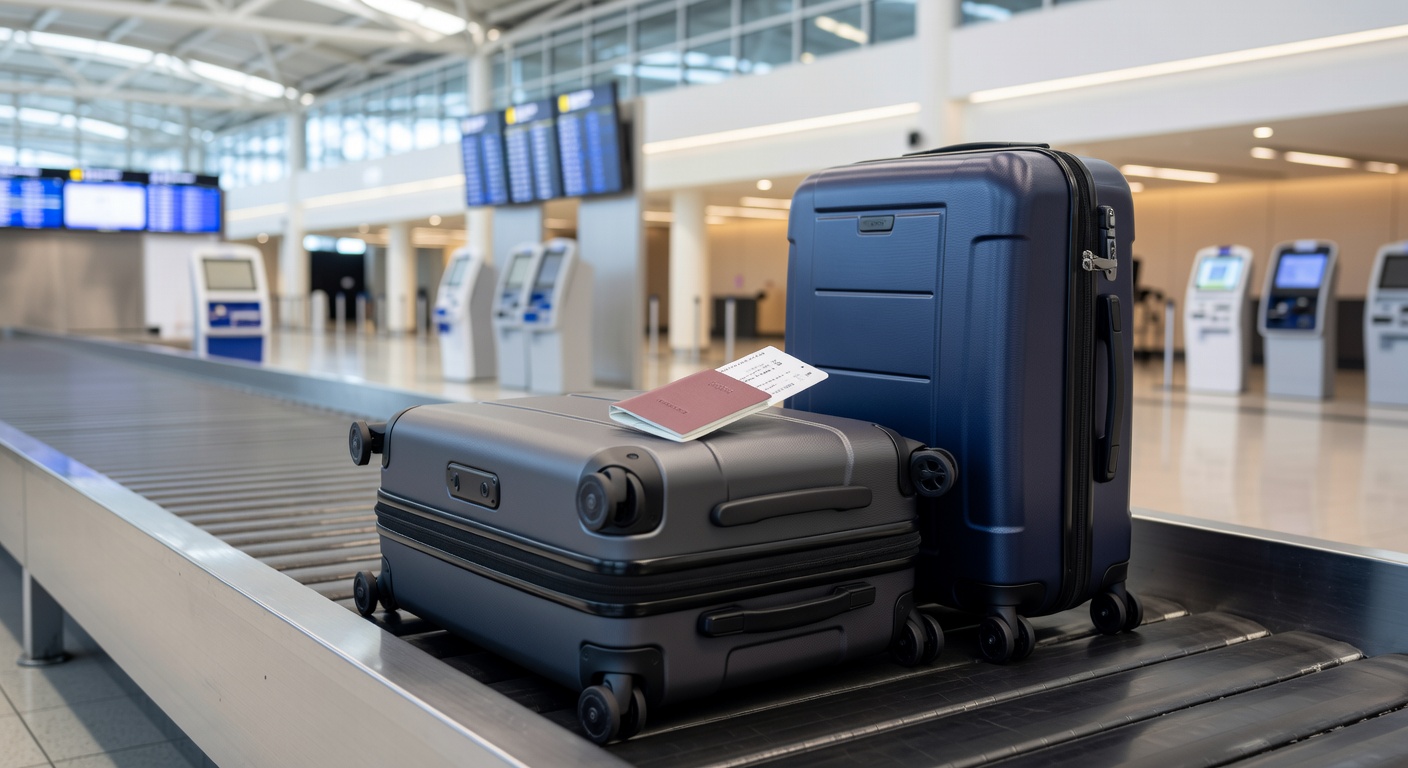
A wide editorial travel photograph of two neatly packed suitcases on an airport check-in conveyor belt under bright terminal lighting, with a boarding pass and passport resting on top of one bag.

Travel Insurance Stops Being Optional


If you drive to the port, travel insurance is a sensible precaution. If you fly, it is close to essential — because flying introduces or amplifies nearly every risk that cruise-specific policies are designed to cover.

A comprehensive policy typically handles trip interruption, missed connections, flight cancellations, medical emergencies abroad, and lost luggage. Pricing varies, but for a seven-night cruise, expect to pay roughly 5% to 10% of the total trip cost. On a $3,000 cruise for two, that works out to $150 to $300 — coverage that could save thousands if a single connection breaks down. InsureMyTrip's 2026 survey found that flight delays were a primary driver of cruise-specific insurance purchases, reinforcing that this is not theoretical anxiety but a practical concern shared by a large number of travellers.

Two details to scrutinise before you buy: first, make sure the policy covers "missed departure" due to airline delay, not just outright flight cancellation. Some cheaper policies draw that distinction, and the difference matters — a three-hour delay that causes you to miss the ship is far more common than a full cancellation. Second, confirm the policy covers the cost of catching up with the ship at the next port: last-minute flights, emergency hotel nights, ground transportation to rejoin the sailing. Without that clause, you are insured against the least likely version of the problem and exposed to the most likely one.

Making the Call: A Framework That Actually Helps


Strip away the noise and this decision rests on four factors.

Distance from the port. If you are within a comfortable day's drive — roughly five to six hours — driving is almost always simpler and cheaper. Beyond that threshold, the balance shifts toward flying with each additional hour of road. At twelve-plus hours, the drive itself becomes an endurance event that most people underestimate on the way there and dread on the way back.

Itinerary availability. If the cruise you want departs from a port you cannot reasonably drive to, the decision is already made. You fly or you pick a different cruise. For the most compelling itineraries on the market right now — Mediterranean, Alaska from Vancouver, Northern Europe, transatlantic repositioning cruises, expedition voyages — flying is the only realistic option for the vast majority of travellers.

Risk tolerance. Some people would rather add a full day of driving than accept any chance of a flight disruption, however small. That is a perfectly legitimate preference, not an irrational one. Others would rather absorb the minor risk — mitigated by arriving early and carrying insurance — in exchange for a shorter, less physically taxing journey. Neither approach is wrong. The key is knowing which type you are before you book, not discovering it at the airport.

Budget structure. Flying adds a visible, upfront cost that shows up on a credit card statement. Driving spreads expenses across fuel, tolls, food, roadside hotels, parking, and time in ways that feel less concentrated but accumulate quietly. Honest accounting — including the value of the vacation days spent on the highway — usually reveals that the gap between the two is narrower than it first appears.

The Bottom Line

Flying to a cruise port is a tradeoff, not a gamble — provided you treat it as one. It unlocks destinations and itineraries that driving cannot reach, and for anyone who lives far from a major port, it often makes more financial sense than the road trip once you account for fuel, fatigue, parking, and the vacation days surrendered to windshield time. The risks are real but manageable: arrive a day early, pack a smart carry-on, buy insurance that covers missed departures, and keep your boarding documents on your person.

The cruisers who regret flying are almost always the ones who booked a 6 a.m. arrival on embarkation day and left themselves no margin for anything to go wrong. The ones who swear by it built in a buffer, turned the pre-cruise overnight into the first chapter of the holiday, and walked up the gangway rested instead of rattled.

Give yourself the margin. The ship leaves on time whether you are on it or not.

Flying to Your Cruise Port: The Real Tradeoffs Nobody Talks About Until It's Too Late

April 1, 2026
A wide editorial travel photograph of a modern airport departure terminal with large floor-to-ceiling windows overlooking the tarmac, with a large cruise ship visible in the distant harbor beyond the
Cruise Planning

Flying to Your Cruise Port: The Real Tradeoffs Nobody Talks About Until It's Too Late

More itineraries open up when you're willing to fly — but so do more ways for things to go sideways. Here's how to weigh the decision honestly.

A wide editorial travel photograph of a modern airport departure terminal with large floor-to-ceiling windows overlooking the tarmac, with a large cruise ship visible in the distant harbor beyond the

A wide editorial travel photograph of a modern airport departure terminal with large floor-to-ceiling windows overlooking the tarmac, with a large cruise ship visible in the distant harbor beyond the

Your cruise departs from Fort Lauderdale at four in the afternoon. You live in Minneapolis. That single fact — the distance between your front door and the gangway — shapes more of your holiday than the ship itself, the cabin you booked, or which shore excursions you circled in the brochure. And yet most first-time cruisers spend hours agonising over balcony versus ocean-view and about five minutes deciding how to get to the port.

Whether to fly or drive to your embarkation city is one of those fork-in-the-road decisions that touches everything: cost, stress, luggage, timing, and which itineraries are even on the table. The upside of flying is obvious — the whole world opens up. The downside is less obvious until it happens to you: a cancelled connection, a suitcase circling a carousel in the wrong city, and a ship pulling away from the dock without you on it.

There is no universal right answer here. It depends on where you live, where the ship sails from, how much schedule risk you can stomach, and how you value your time. What follows is an honest look at both sides — the parts that work, the parts that can go wrong, and the one planning move that changes the entire equation.

The Upsides of Flying
The World Opens Up Flying unlocks far more itineraries than driving ever could.

Access Any Port Reach major embarkation cities regardless of where you live.

Cost Can Balance Out Flights may cost less than you'd spend driving long distances.

Pre-Cruise Buffer Day Arriving early turns flight risk into a manageable non-issue.

Expanded Itinerary Choices Exotic and international departures become genuinely viable options.
The Tradeoffs to Know
Missing the Ship Risk A delayed flight on embarkation day can mean the ship sails without you.

Added Flight Costs Round-trip airfare adds $150–$400 per person to your trip budget.

Strict Luggage Limits Airline restrictions mean leaving bulky or extra bags behind.

Insurance Becomes Essential Flying amplifies nearly every risk that travel insurance is designed to cover.

More Moving Parts Each connection or layover introduces another point of potential failure.

The Bottom Line
Unlocks Far More Destinations Plan Ahead or Risk Missing the Ship

The Obvious Advantage: The Entire World Opens Up


The single biggest reason to fly to a cruise port is access. Limit yourself to ports you can drive to and you limit yourself to a narrow slice of what's out there. A family in Ohio can realistically drive to Galveston or maybe New Orleans — solid departure points, but a fraction of the map. Fly, and suddenly you're choosing between Mediterranean sailings out of Barcelona, Alaska voyages from Vancouver, Northern European itineraries departing Copenhagen, and dozens of Caribbean routes from multiple Florida ports and San Juan.

That map is getting wider every year. CLIA's 2025 State of the Industry Report projects 37.7 million cruise passengers globally, and cruise lines are responding by deploying ships across more regions and more homeports than at any point in the industry's history. Repositioning cruises between continents, expedition voyages from remote Arctic or Antarctic gateways, round-trip sailings timed to connect with major international airports — these itineraries are designed for people who fly in. They barely exist for people who don't.

If you've sailed out of the same port three or four times and the itineraries are starting to blur together, flying is how you break out of the loop. About 72% of American cruisers sail the Caribbean, according to AAA's 2026 cruise forecast, which means the other 28% are already going somewhere that almost certainly required a plane ticket.

The Risk That Keeps Experienced Cruisers Up at Night


Here is the scenario every fly-to-cruise traveller needs to sit with before booking: your flight is delayed or cancelled on embarkation day, and the ship sails without you.

It happens. Not often — but often enough that the insurance industry has built an entire product category around it. InsureMyTrip's 2026 survey data identifies flight delays as one of the top concerns driving demand for cruise-specific travel insurance, alongside weather disruptions and illness. The concern tracks with reality. Airlines cancel roughly 1.5% to 2% of domestic U.S. flights in a typical year, and delays touch a significantly larger share. On any given embarkation day at Port Everglades or Galveston, a handful of passengers are sprinting through an airport or sitting on a tarmac watching the clock.

The ship will not wait. This is not a hotel holding your room past check-in. Cruise lines publish departure times and stick to them because port schedules, tidal windows, and the next day's itinerary all depend on leaving on time. Miss it, and you are booking a last-minute flight to the first port of call and joining the ship there — at your own expense, on your own logistics, having already lost a day or two of the voyage you paid for.

This is not a reason to never fly. It is a reason to fly in early — which brings us to the single most important piece of advice in this article.

The ship will not wait. Miss it, and you are booking a last-minute flight to the first port of call and joining the ship there — at your own expense.

The One-Day Buffer That Changes Everything


Arriving at the embarkation city at least one full day before the ship sails is the single most effective thing you can do to neutralise the biggest risk of flying to a cruise. It converts a high-stakes race into a calm start to your holiday.

Fly in the afternoon or evening before. Check into a hotel near the port. Sleep in a real bed. Eat a proper breakfast. Walk to the terminal at your own pace. If your inbound flight was delayed three hours, you absorbed it without breaking a sweat. If your checked bag took a detour through Atlanta, the airline had overnight to locate it and get it to you. The cost of that buffer — anywhere from roughly $80 to $250 per night depending on the city, as of early 2026 — is a fraction of what you'd spend trying to catch up with a ship that left without you.

For international embarkation ports, experienced cruisers often arrive two days early. Flying from the U.S. to Barcelona or Rome the morning before a sailing is asking for trouble on multiple fronts — jet lag alone will flatten you, and any flight disruption leaves zero margin. Two nights in the departure city gives you time to adjust, explore a bit, and reach the gangway feeling like a rested human being rather than someone who just survived a transatlantic obstacle course.

Think of the pre-cruise hotel night not as an added expense but as infrastructure. It's the load-bearing wall between your flight logistics and your cruise.

A wide editorial travel photograph of a traveler enjoying a calm, sunlit hotel room breakfast near a window with a view of a European port city waterfront and a cruise ship visible in the harbor below

What Flying Actually Adds to the Cost — and Where It Doesn't


The financial picture is more layered than most people expect. Flights cost money, obviously. Round-trip domestic airfare to major Florida cruise ports typically runs $150 to $400 per person depending on origin city and booking window (as of early 2026 pricing). International flights to Mediterranean or Northern European departure cities can range from $500 to $1,200. Stack on a pre-cruise hotel night, ground transfers to the terminal, and maybe a checked-bag fee, and you might be looking at $300 to $600 per person in added costs for a domestic sailing, or $700 to $1,500 for a European one.

But the real comparison is not flight cost versus zero. Driving has its own ledger. Fuel, tolls, meals on the road, possibly one or two hotel nights en route, and port-area parking for the duration of the cruise — which runs $10 to $25 per day at many Florida ports, adding $70 to $175 for a seven-night sailing. A family of four driving twelve hours each way to Fort Lauderdale with one overnight stop and a week of parking can spend $500 to $800 before anyone boards the ship. They have also surrendered two full vacation days to highway.

The honest calculation accounts for time as well as money. For cruisers who live more than eight or ten hours from the nearest port, flying frequently comes out closer in total cost than the road trip — and it returns those driving days as actual days of holiday. A couple in Chicago flying to Miami versus driving: the airfare is higher, but they gain back roughly thirty hours of windshield time. That is not a small thing.

Where driving wins decisively is proximity. If you live three hours from a cruise port, the car is practically free in both money and time. Flying would be an unnecessary expense and an unnecessary complication. The tipping point varies by household, but somewhere around a six-to-eight-hour drive is where the math starts to favour the airport for most travellers.

The Luggage Factor


Driving to a cruise port means packing with almost no constraints. Extra suitcase, cooler for the car ride, that bulky garment bag with the formal-night outfit you might or might not wear — the boot of the car does not charge a bag fee and does not enforce a weight limit.

Flying changes the equation. Checked-bag fees on most U.S. airlines run $30 to $45 per bag each way (as of early 2026), and weight limits mean you cannot bring everything. Cruisers who fly learn to pack more selectively — which is not necessarily a bad thing, since most people overpack for cruises regardless — but it requires forethought. Formal attire, snorkelling gear, multiple pairs of shoes: all of it has to fit within the airline's allowances or cost extra.

The deeper concern is lost luggage. A suitcase that doesn't arrive when you do is an inconvenience at a resort. On a cruise, it is a genuine problem — the ship is leaving, and your bag might not be on it. This, again, is where the buffer day earns its keep. Arriving twenty-four hours early gives the airline time to locate and forward a delayed bag before you embark.

One practical hedge that experienced fly-to-cruise travellers rely on: pack one full change of clothes, all medications, essential toiletries, your cruise documents, and your swimsuit in your carry-on. If the checked bag takes a scenic detour, you still board the ship with everything you need for the first day and night. You can buy a toothbrush in the onboard shop. You cannot buy your blood-pressure medication.

A wide editorial travel photograph of two neatly packed suitcases on an airport check-in conveyor belt under bright terminal lighting, with a boarding pass and passport resting on top of one bag.

Travel Insurance Stops Being Optional


If you drive to the port, travel insurance is a sensible precaution. If you fly, it is close to essential — because flying introduces or amplifies nearly every risk that cruise-specific policies are designed to cover.

A comprehensive policy typically handles trip interruption, missed connections, flight cancellations, medical emergencies abroad, and lost luggage. Pricing varies, but for a seven-night cruise, expect to pay roughly 5% to 10% of the total trip cost. On a $3,000 cruise for two, that works out to $150 to $300 — coverage that could save thousands if a single connection breaks down. InsureMyTrip's 2026 survey found that flight delays were a primary driver of cruise-specific insurance purchases, reinforcing that this is not theoretical anxiety but a practical concern shared by a large number of travellers.

Two details to scrutinise before you buy: first, make sure the policy covers "missed departure" due to airline delay, not just outright flight cancellation. Some cheaper policies draw that distinction, and the difference matters — a three-hour delay that causes you to miss the ship is far more common than a full cancellation. Second, confirm the policy covers the cost of catching up with the ship at the next port: last-minute flights, emergency hotel nights, ground transportation to rejoin the sailing. Without that clause, you are insured against the least likely version of the problem and exposed to the most likely one.

Making the Call: A Framework That Actually Helps


Strip away the noise and this decision rests on four factors.

Distance from the port. If you are within a comfortable day's drive — roughly five to six hours — driving is almost always simpler and cheaper. Beyond that threshold, the balance shifts toward flying with each additional hour of road. At twelve-plus hours, the drive itself becomes an endurance event that most people underestimate on the way there and dread on the way back.

Itinerary availability. If the cruise you want departs from a port you cannot reasonably drive to, the decision is already made. You fly or you pick a different cruise. For the most compelling itineraries on the market right now — Mediterranean, Alaska from Vancouver, Northern Europe, transatlantic repositioning cruises, expedition voyages — flying is the only realistic option for the vast majority of travellers.

Risk tolerance. Some people would rather add a full day of driving than accept any chance of a flight disruption, however small. That is a perfectly legitimate preference, not an irrational one. Others would rather absorb the minor risk — mitigated by arriving early and carrying insurance — in exchange for a shorter, less physically taxing journey. Neither approach is wrong. The key is knowing which type you are before you book, not discovering it at the airport.

Budget structure. Flying adds a visible, upfront cost that shows up on a credit card statement. Driving spreads expenses across fuel, tolls, food, roadside hotels, parking, and time in ways that feel less concentrated but accumulate quietly. Honest accounting — including the value of the vacation days spent on the highway — usually reveals that the gap between the two is narrower than it first appears.

The Bottom Line

Flying to a cruise port is a tradeoff, not a gamble — provided you treat it as one. It unlocks destinations and itineraries that driving cannot reach, and for anyone who lives far from a major port, it often makes more financial sense than the road trip once you account for fuel, fatigue, parking, and the vacation days surrendered to windshield time. The risks are real but manageable: arrive a day early, pack a smart carry-on, buy insurance that covers missed departures, and keep your boarding documents on your person.

The cruisers who regret flying are almost always the ones who booked a 6 a.m. arrival on embarkation day and left themselves no margin for anything to go wrong. The ones who swear by it built in a buffer, turned the pre-cruise overnight into the first chapter of the holiday, and walked up the gangway rested instead of rattled.

Give yourself the margin. The ship leaves on time whether you are on it or not.