
Cruise Ducking: The Rubber Duck Tradition That Took Over the High Seas

May 19, 2026
Cruise Ship Pool Deck Rubber DuckyCruise Ship Pool Deck Rubber Ducky

Cruise Terminology

Cruise Ducking: The Rubber Duck Tradition That Took Over the High Seas

How millions of rubber ducks ended up hiding in stairwells, elevator landings, and poolside towel animals — and why passengers keep coming back for more.

Cruise Ship Pool Deck Rubber Ducky

Cruise Ship Pool Deck Rubber Ducky

Somewhere right now, on a cruise ship you may one day board, a grown adult is crouching behind a sun lounger at 7 a.m. with a tiny rubber duck in their hand, carefully positioning it on a stranger's flip-flop. They decorated that duck themselves. They packed it in their luggage. They may have packed dozens. This is ducking — one of the most genuinely bizarre, surprisingly wholesome, and completely real traditions in modern cruising.

If you have never sailed before, the concept can sound like something someone invented to test whether you are gullible. It is not. Ducking is a full-blown phenomenon with its own etiquette, its own Facebook groups (plural), its own supply chains, and at least one dedicated retailer — Happy Duckers — that exists entirely because adults cannot stop hiding small waterfowl on floating hotels. Here is what ducking is, how it works, and what to know if you want to join in or simply understand why a rubber pirate appeared on your balcony railing.

What Ducking Actually Is


Cruise ducking is exactly what it sounds like: passengers bring small rubber ducks aboard a cruise ship, decorate or tag them, and hide them around the ship for other passengers to find. There is no prize. There is no leaderboard. There is no app. It is a treasure hunt with no treasure, run by no one, and it has spread across the industry with the kind of momentum that only things too silly to resist seem to generate.

The ducks are usually standard bath-toy size — small enough to tuck behind a napkin dispenser or balance on the edge of a hot tub. Most come with a small tag or sticker attached: something like "You've been ducked! Keep me or hide me for someone else to find." Some tags include the ship name, the sailing date, or a social media handle so the finder can post a photo and let the hider know their duck landed.

The origins are a little hazy, but most accounts trace the trend to a cruise passenger around 2018 who started hiding ducks as a way to spread random joy on board. It spread through Facebook cruise groups, then to TikTok, and by now it is effectively universal. You will find ducks on ships across every major line — basically any vessel with more than a few hundred passengers aboard has at least one dedicated ducker.

Cruise Promenade Rubber Ducky

The Scale of This Thing


To appreciate how deeply ducking has embedded itself into cruise culture, consider the numbers. AAA projects 21.7 million Americans will take an ocean cruise in 2026 alone. Globally, an estimated 37.1 million passengers will embark on cruises this year, according to PhotoAid's cruise industry data. On any given sailing of a large ship, it is not unusual for dozens — sometimes hundreds — of ducks to be circulating at any one time.

Nobody has hard data on total ducks deployed annually, because this is a decentralised, grassroots rubber duck distribution network that no one is tracking with any rigour. But the Facebook group "Cruise Ship Ducks" has hundreds of thousands of members. Scroll through it for five minutes and you will see people posting hauls of fifty, sixty, a hundred ducks they are preparing for a single sailing. The math gets silly fast.

The typical age of a cruise passenger is 46.5 years old, according to PhotoAid. Picture that person — mid-forties, probably a professional, possibly someone you work with — painting a tiny beak with acrylic paint at their kitchen table the night before embarkation. That is the demographic reality of ducking. It is not mostly kids doing this. It is adults with mortgages and opinions about wine.

The magic of ducking is that it turns an ordinary walk across the ship into a small act of discovery.

The Unwritten Rules (Because of Course There Are Rules)


For an activity with no governing body, ducking has developed a surprisingly detailed set of norms. Violate them and you will hear about it in the Facebook comments.

The most universally held rule: you do not take ducks from children. If a kid finds a duck, the duck belongs to the kid. You are an adult and you can buy your own. The child is having a moment. Beyond that, a finder has three options — keep the duck, re-hide it on the same ship, or take it home and bring it on a future cruise to continue its journey. Some ducks have traveled across multiple sailings and oceans, which is either charming or deeply strange depending on your tolerance for anthropomorphising bath toys.

On the practical side, duckers are expected to avoid unsafe or inaccessible spots. Not in lifeboats. Not near emergency equipment. Not in the engine room, which you should not be in anyway. Crew members have enough to do without fishing rubber animals out of fire extinguisher cabinets. Ducks should also stay out of other people's food — a rule that seems obvious, but the fact that it needs saying tells you something about the trajectory of any internet-fuelled trend.

Some cruise lines have quietly asked passengers not to leave ducks in certain areas, particularly near pools where they can clog drains and in dining rooms where they create confusion about what is a decoration and what is a health code situation, according to Cruise Critic. These are reasonable requests. Respect them.

How to Duck Properly


If you have decided this is your thing — and something about ducking does seem to be contagious — here is what experienced duckers recommend.

Start with bulk rubber ducks. Packs of fifty or a hundred are available online for a few dollars (as of early 2026, roughly $10–$15 for a hundred on major retailers). The small ones, about two inches tall, work best because they fit everywhere and do not eat into your luggage allowance. A bag of a hundred tiny ducks weighs almost nothing and packs into a corner of your suitcase that was going to be wasted space anyway.

Decoration is where people diverge. Some go minimalist — a Sharpie and a tag. Others go full art project: googly eyes, tiny hats, glitter, themed costumes. There are Halloween ducks, ducks dressed as pirates, ducks in sombreros, ducks wearing sunglasses somehow smaller than a grain of rice. The crafting-community crossover is real and intense.

Attach a waterproof tag with a short message. Include the ship name and sail date if you want. Include a social media handle if you want to see where the duck ends up. Do not include your cabin number — that is how you get strangers knocking on your door holding a duck and expecting a conversation you did not prepare for.

For hiding spots, aim for places that are accessible and visible enough to be discovered within a few hours. Elevator landings, bar counters, the edges of planter boxes on the promenade deck, or tucked into the fold of a towel animal all work well. Avoid anywhere a crew member would need a ladder or a wrench to retrieve it.

Cruise Luggage With Rubber Ducks

What the Cruise Lines Think About All This


Officially, most cruise lines land somewhere between tolerant and amused. No major line has banned ducking outright, though several have issued guidance about where ducks should and should not be placed, as Cruise Critic has reported.

On many ships, crew members have been known to participate — tucking ducks into cabin towel animals during turndown service or lining a few up behind the bar. The general posture across the industry is permissive, provided passengers stick to common-sense placement.

The practical concern from the ship's perspective is less about the ducks themselves and more about the sheer volume. On a seven-night sailing with 5,000 passengers, if even ten percent are ducking, that is potentially hundreds of small plastic objects scattered across a vessel that needs to be cleaned and maintained around the clock. Housekeeping teams have feelings about this, and those feelings are not always warm. Being considerate about placement and quantity goes a long way toward keeping the tradition welcome.

Why Grown Adults Are So Into This


There is something worth pausing on here, because ducking should not work. It is objectively ridiculous. You are paying thousands of dollars for a vacation, and a meaningful portion of your enjoyment comes from a two-cent rubber duck you found wedged behind a piano on Deck 7. And yet — people light up when they find one. Kids sprint across the pool deck screaming about it. Adults post photos online with genuine pride.

The best explanation is that ducking works precisely because it has no stakes. There is nothing to buy, nothing to win, nothing to optimise. In a vacation environment increasingly engineered around spending — drink packages, specialty dining, shore excursions, Wi-Fi upgrades, spa credits — finding a rubber duck is maybe the only thing that happens on a cruise that is completely, absurdly free. You did not budget for it. Nobody is trying to upsell you on a premium duck experience. It just appeared, and it is yours, and it is wearing a tiny sombrero.

There is also a social element that matters. Cruises are one of the few vacation formats where you share space with thousands of strangers for days at a time. Ducking creates a low-stakes connection between people who would otherwise never interact. You find a duck, you post it, the person who hid it sees the post, and for a moment two strangers share a tiny, ridiculous thing. On a ship where most passenger-to-passenger interactions happen in a buffet line, that is not nothing.

Couple Placing Ducks in Cruise Ship Hallway
Finding a rubber duck is maybe the only thing that happens on a cruise that is completely, absurdly free. Nobody is trying to upsell you on a premium duck experience.

Should You Bring Ducks on Your Next Cruise?

If you are sailing with kids, strongly consider it. Ducking turns the entire ship into a scavenger hunt, and if your children are old enough to roam a deck or two on their own, finding ducks gives them a mission that does not involve the arcade or additional spending. Bring a few to hide, too — kids love the hiding as much as the finding, and it fills a solid twenty minutes that would otherwise be spent asking you for ice cream.

If you are sailing without kids, it depends on your personality. Some people find ducking delightful — a small, silly layer on top of a vacation that makes random moments better. Others find it cluttered and mildly annoying, the cruise equivalent of someone leaving flyers under your windshield wiper. Both reactions are reasonable.

A few practical notes if you do participate. Pack your ducks in your carry-on bag, not your checked luggage — checked bags go through security screening, and a suitcase containing sixty rubber ducks does generate questions. Bring small zip-lock bags for the tags, too. The sea air and pool humidity will destroy a paper tag within hours if it is not protected. And if you find a duck and decide to keep it, take a photo and post it if there is a social media tag on it. The person who hid it is probably refreshing their phone in the buffet line right now, waiting to see if anyone found their tiny masterpiece. Let them have that moment.

Cruise Ship Pool Deck Rubber Ducky

Cruise Vacation

Summer 2026

Find Your Sailing
Thank you! Your submission has been received!
Oops! Something went wrong while submitting the form.

Cruise Ducking: The Rubber Duck Tradition That Took Over the High Seas

Cruise Terminology

Cruise Ducking: The Rubber Duck Tradition That Took Over the High Seas

How millions of rubber ducks ended up hiding in stairwells, elevator landings, and poolside towel animals — and why passengers keep coming back for more.
Cruise Ship Pool Deck Rubber Ducky

Cruise Ship Pool Deck Rubber Ducky

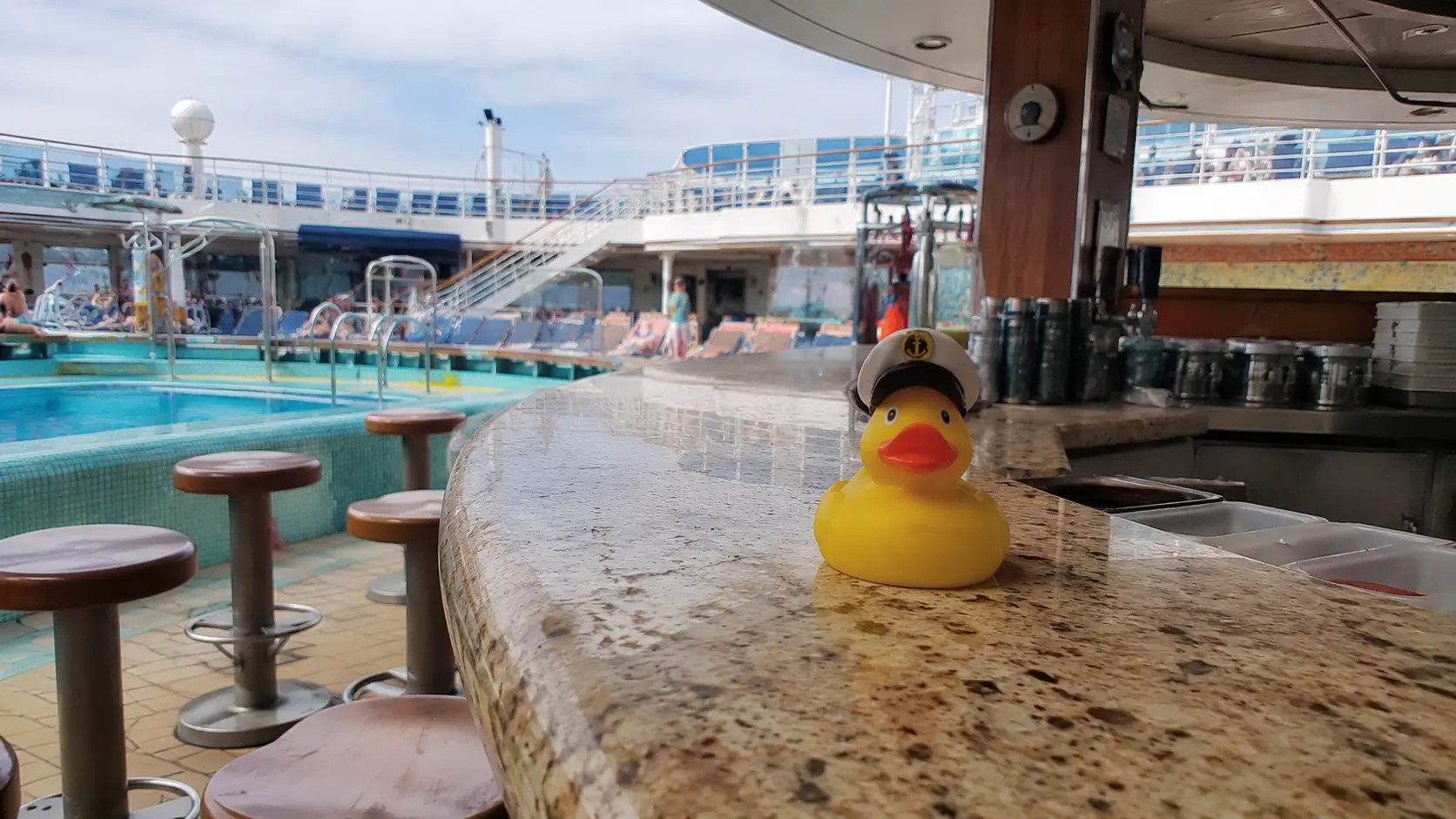
Somewhere right now, on a cruise ship you may one day board, a grown adult is crouching behind a sun lounger at 7 a.m. with a tiny rubber duck in their hand, carefully positioning it on a stranger's flip-flop. They decorated that duck themselves. They packed it in their luggage. They may have packed dozens. This is ducking — one of the most genuinely bizarre, surprisingly wholesome, and completely real traditions in modern cruising.

If you have never sailed before, the concept can sound like something someone invented to test whether you are gullible. It is not. Ducking is a full-blown phenomenon with its own etiquette, its own Facebook groups (plural), its own supply chains, and at least one dedicated retailer — Happy Duckers — that exists entirely because adults cannot stop hiding small waterfowl on floating hotels. Here is what ducking is, how it works, and what to know if you want to join in or simply understand why a rubber pirate appeared on your balcony railing.

What Ducking Actually Is


Cruise ducking is exactly what it sounds like: passengers bring small rubber ducks aboard a cruise ship, decorate or tag them, and hide them around the ship for other passengers to find. There is no prize. There is no leaderboard. There is no app. It is a treasure hunt with no treasure, run by no one, and it has spread across the industry with the kind of momentum that only things too silly to resist seem to generate.

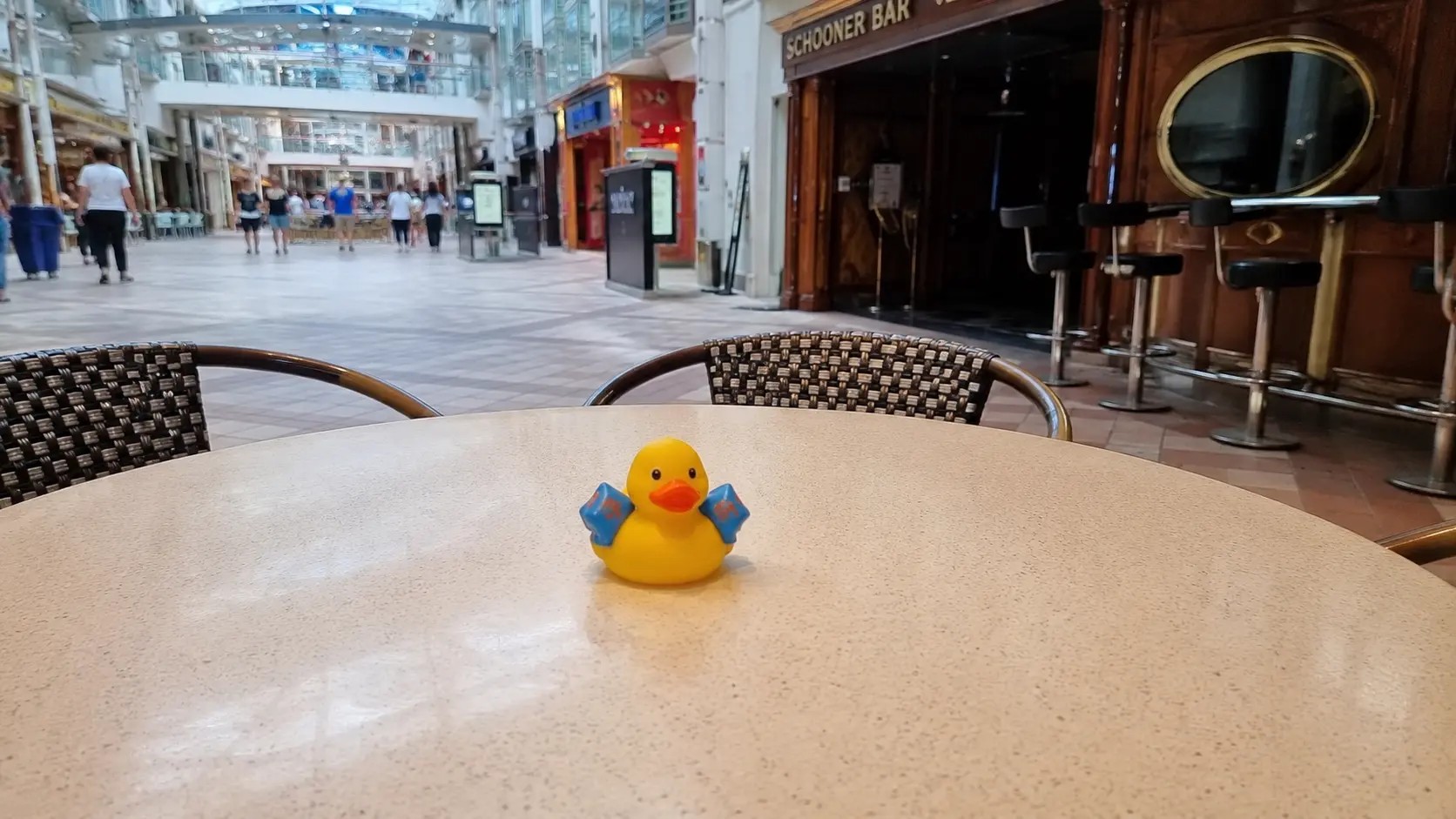
The ducks are usually standard bath-toy size — small enough to tuck behind a napkin dispenser or balance on the edge of a hot tub. Most come with a small tag or sticker attached: something like "You've been ducked! Keep me or hide me for someone else to find." Some tags include the ship name, the sailing date, or a social media handle so the finder can post a photo and let the hider know their duck landed.

The origins are a little hazy, but most accounts trace the trend to a cruise passenger around 2018 who started hiding ducks as a way to spread random joy on board. It spread through Facebook cruise groups, then to TikTok, and by now it is effectively universal. You will find ducks on ships across every major line — basically any vessel with more than a few hundred passengers aboard has at least one dedicated ducker.
Cruise Promenade Rubber Ducky

The Scale of This Thing


To appreciate how deeply ducking has embedded itself into cruise culture, consider the numbers. AAA projects 21.7 million Americans will take an ocean cruise in 2026 alone. Globally, an estimated 37.1 million passengers will embark on cruises this year, according to PhotoAid's cruise industry data. On any given sailing of a large ship, it is not unusual for dozens — sometimes hundreds — of ducks to be circulating at any one time.

Nobody has hard data on total ducks deployed annually, because this is a decentralised, grassroots rubber duck distribution network that no one is tracking with any rigour. But the Facebook group "Cruise Ship Ducks" has hundreds of thousands of members. Scroll through it for five minutes and you will see people posting hauls of fifty, sixty, a hundred ducks they are preparing for a single sailing. The math gets silly fast.

The typical age of a cruise passenger is 46.5 years old, according to PhotoAid. Picture that person — mid-forties, probably a professional, possibly someone you work with — painting a tiny beak with acrylic paint at their kitchen table the night before embarkation. That is the demographic reality of ducking. It is not mostly kids doing this. It is adults with mortgages and opinions about wine.

The magic of ducking is that it turns an ordinary walk across the ship into a small act of discovery.

The Unwritten Rules (Because of Course There Are Rules)


For an activity with no governing body, ducking has developed a surprisingly detailed set of norms. Violate them and you will hear about it in the Facebook comments.

The most universally held rule: you do not take ducks from children. If a kid finds a duck, the duck belongs to the kid. You are an adult and you can buy your own. The child is having a moment. Beyond that, a finder has three options — keep the duck, re-hide it on the same ship, or take it home and bring it on a future cruise to continue its journey. Some ducks have traveled across multiple sailings and oceans, which is either charming or deeply strange depending on your tolerance for anthropomorphising bath toys.

On the practical side, duckers are expected to avoid unsafe or inaccessible spots. Not in lifeboats. Not near emergency equipment. Not in the engine room, which you should not be in anyway. Crew members have enough to do without fishing rubber animals out of fire extinguisher cabinets. Ducks should also stay out of other people's food — a rule that seems obvious, but the fact that it needs saying tells you something about the trajectory of any internet-fuelled trend.

Some cruise lines have quietly asked passengers not to leave ducks in certain areas, particularly near pools where they can clog drains and in dining rooms where they create confusion about what is a decoration and what is a health code situation, according to Cruise Critic. These are reasonable requests. Respect them.

How to Duck Properly


If you have decided this is your thing — and something about ducking does seem to be contagious — here is what experienced duckers recommend.

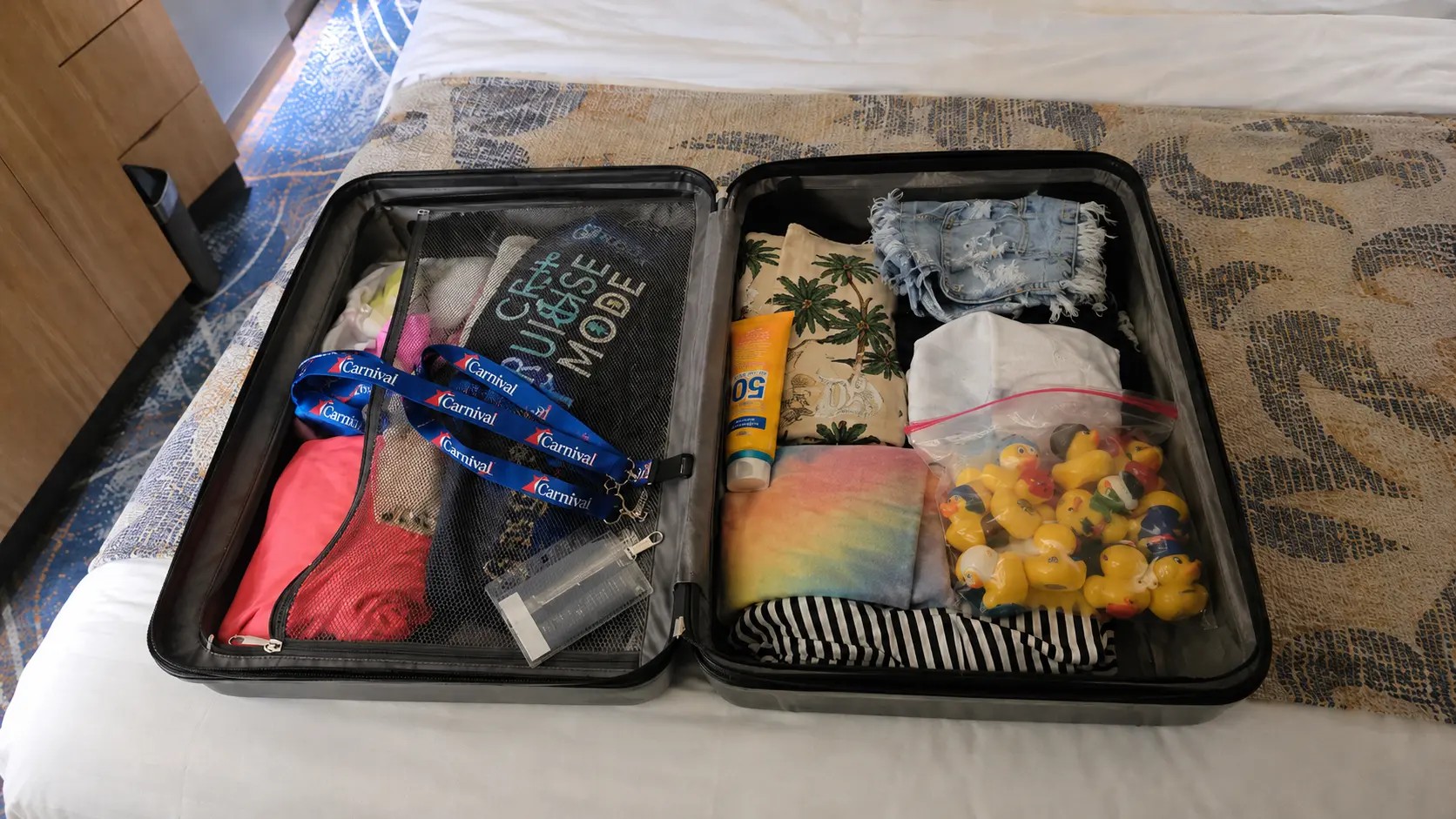
Start with bulk rubber ducks. Packs of fifty or a hundred are available online for a few dollars (as of early 2026, roughly $10–$15 for a hundred on major retailers). The small ones, about two inches tall, work best because they fit everywhere and do not eat into your luggage allowance. A bag of a hundred tiny ducks weighs almost nothing and packs into a corner of your suitcase that was going to be wasted space anyway.

Decoration is where people diverge. Some go minimalist — a Sharpie and a tag. Others go full art project: googly eyes, tiny hats, glitter, themed costumes. There are Halloween ducks, ducks dressed as pirates, ducks in sombreros, ducks wearing sunglasses somehow smaller than a grain of rice. The crafting-community crossover is real and intense.

Attach a waterproof tag with a short message. Include the ship name and sail date if you want. Include a social media handle if you want to see where the duck ends up. Do not include your cabin number — that is how you get strangers knocking on your door holding a duck and expecting a conversation you did not prepare for.

For hiding spots, aim for places that are accessible and visible enough to be discovered within a few hours. Elevator landings, bar counters, the edges of planter boxes on the promenade deck, or tucked into the fold of a towel animal all work well. Avoid anywhere a crew member would need a ladder or a wrench to retrieve it.
Cruise Luggage With Rubber Ducks

What the Cruise Lines Think About All This


Officially, most cruise lines land somewhere between tolerant and amused. No major line has banned ducking outright, though several have issued guidance about where ducks should and should not be placed, as Cruise Critic has reported.

On many ships, crew members have been known to participate — tucking ducks into cabin towel animals during turndown service or lining a few up behind the bar. The general posture across the industry is permissive, provided passengers stick to common-sense placement.

The practical concern from the ship's perspective is less about the ducks themselves and more about the sheer volume. On a seven-night sailing with 5,000 passengers, if even ten percent are ducking, that is potentially hundreds of small plastic objects scattered across a vessel that needs to be cleaned and maintained around the clock. Housekeeping teams have feelings about this, and those feelings are not always warm. Being considerate about placement and quantity goes a long way toward keeping the tradition welcome.

Why Grown Adults Are So Into This


There is something worth pausing on here, because ducking should not work. It is objectively ridiculous. You are paying thousands of dollars for a vacation, and a meaningful portion of your enjoyment comes from a two-cent rubber duck you found wedged behind a piano on Deck 7. And yet — people light up when they find one. Kids sprint across the pool deck screaming about it. Adults post photos online with genuine pride.

The best explanation is that ducking works precisely because it has no stakes. There is nothing to buy, nothing to win, nothing to optimise. In a vacation environment increasingly engineered around spending — drink packages, specialty dining, shore excursions, Wi-Fi upgrades, spa credits — finding a rubber duck is maybe the only thing that happens on a cruise that is completely, absurdly free. You did not budget for it. Nobody is trying to upsell you on a premium duck experience. It just appeared, and it is yours, and it is wearing a tiny sombrero.

There is also a social element that matters. Cruises are one of the few vacation formats where you share space with thousands of strangers for days at a time. Ducking creates a low-stakes connection between people who would otherwise never interact. You find a duck, you post it, the person who hid it sees the post, and for a moment two strangers share a tiny, ridiculous thing. On a ship where most passenger-to-passenger interactions happen in a buffet line, that is not nothing.

Couple Placing Ducks in Cruise Ship Hallway
Finding a rubber duck is maybe the only thing that happens on a cruise that is completely, absurdly free. Nobody is trying to upsell you on a premium duck experience.

Should You Bring Ducks on Your Next Cruise?

If you are sailing with kids, strongly consider it. Ducking turns the entire ship into a scavenger hunt, and if your children are old enough to roam a deck or two on their own, finding ducks gives them a mission that does not involve the arcade or additional spending. Bring a few to hide, too — kids love the hiding as much as the finding, and it fills a solid twenty minutes that would otherwise be spent asking you for ice cream.

If you are sailing without kids, it depends on your personality. Some people find ducking delightful — a small, silly layer on top of a vacation that makes random moments better. Others find it cluttered and mildly annoying, the cruise equivalent of someone leaving flyers under your windshield wiper. Both reactions are reasonable.

A few practical notes if you do participate. Pack your ducks in your carry-on bag, not your checked luggage — checked bags go through security screening, and a suitcase containing sixty rubber ducks does generate questions. Bring small zip-lock bags for the tags, too. The sea air and pool humidity will destroy a paper tag within hours if it is not protected. And if you find a duck and decide to keep it, take a photo and post it if there is a social media tag on it. The person who hid it is probably refreshing their phone in the buffet line right now, waiting to see if anyone found their tiny masterpiece. Let them have that moment.

Cruise Ship Pool Deck Rubber Ducky

Cruise Vacation

Summer 2026

Find Your Sailing

Cruise Ducking: The Rubber Duck Tradition That Took Over the High Seas

May 19, 2026
Cruise Terminology

Cruise Ducking: The Rubber Duck Tradition That Took Over the High Seas

How millions of rubber ducks ended up hiding in stairwells, elevator landings, and poolside towel animals — and why passengers keep coming back for more.

Cruise Ship Pool Deck Rubber Ducky

Cruise Ship Pool Deck Rubber Ducky

Somewhere right now, on a cruise ship you may one day board, a grown adult is crouching behind a sun lounger at 7 a.m. with a tiny rubber duck in their hand, carefully positioning it on a stranger's flip-flop. They decorated that duck themselves. They packed it in their luggage. They may have packed dozens. This is ducking — one of the most genuinely bizarre, surprisingly wholesome, and completely real traditions in modern cruising.

If you have never sailed before, the concept can sound like something someone invented to test whether you are gullible. It is not. Ducking is a full-blown phenomenon with its own etiquette, its own Facebook groups (plural), its own supply chains, and at least one dedicated retailer — Happy Duckers — that exists entirely because adults cannot stop hiding small waterfowl on floating hotels. Here is what ducking is, how it works, and what to know if you want to join in or simply understand why a rubber pirate appeared on your balcony railing.

What Ducking Actually Is


Cruise ducking is exactly what it sounds like: passengers bring small rubber ducks aboard a cruise ship, decorate or tag them, and hide them around the ship for other passengers to find. There is no prize. There is no leaderboard. There is no app. It is a treasure hunt with no treasure, run by no one, and it has spread across the industry with the kind of momentum that only things too silly to resist seem to generate.

The ducks are usually standard bath-toy size — small enough to tuck behind a napkin dispenser or balance on the edge of a hot tub. Most come with a small tag or sticker attached: something like "You've been ducked! Keep me or hide me for someone else to find." Some tags include the ship name, the sailing date, or a social media handle so the finder can post a photo and let the hider know their duck landed.

The origins are a little hazy, but most accounts trace the trend to a cruise passenger around 2018 who started hiding ducks as a way to spread random joy on board. It spread through Facebook cruise groups, then to TikTok, and by now it is effectively universal. You will find ducks on ships across every major line — basically any vessel with more than a few hundred passengers aboard has at least one dedicated ducker.

Cruise Promenade Rubber Ducky

The Scale of This Thing


To appreciate how deeply ducking has embedded itself into cruise culture, consider the numbers. AAA projects 21.7 million Americans will take an ocean cruise in 2026 alone. Globally, an estimated 37.1 million passengers will embark on cruises this year, according to PhotoAid's cruise industry data. On any given sailing of a large ship, it is not unusual for dozens — sometimes hundreds — of ducks to be circulating at any one time.

Nobody has hard data on total ducks deployed annually, because this is a decentralised, grassroots rubber duck distribution network that no one is tracking with any rigour. But the Facebook group "Cruise Ship Ducks" has hundreds of thousands of members. Scroll through it for five minutes and you will see people posting hauls of fifty, sixty, a hundred ducks they are preparing for a single sailing. The math gets silly fast.

The typical age of a cruise passenger is 46.5 years old, according to PhotoAid. Picture that person — mid-forties, probably a professional, possibly someone you work with — painting a tiny beak with acrylic paint at their kitchen table the night before embarkation. That is the demographic reality of ducking. It is not mostly kids doing this. It is adults with mortgages and opinions about wine.

The magic of ducking is that it turns an ordinary walk across the ship into a small act of discovery.

The Unwritten Rules (Because of Course There Are Rules)


For an activity with no governing body, ducking has developed a surprisingly detailed set of norms. Violate them and you will hear about it in the Facebook comments.

The most universally held rule: you do not take ducks from children. If a kid finds a duck, the duck belongs to the kid. You are an adult and you can buy your own. The child is having a moment. Beyond that, a finder has three options — keep the duck, re-hide it on the same ship, or take it home and bring it on a future cruise to continue its journey. Some ducks have traveled across multiple sailings and oceans, which is either charming or deeply strange depending on your tolerance for anthropomorphising bath toys.

On the practical side, duckers are expected to avoid unsafe or inaccessible spots. Not in lifeboats. Not near emergency equipment. Not in the engine room, which you should not be in anyway. Crew members have enough to do without fishing rubber animals out of fire extinguisher cabinets. Ducks should also stay out of other people's food — a rule that seems obvious, but the fact that it needs saying tells you something about the trajectory of any internet-fuelled trend.

Some cruise lines have quietly asked passengers not to leave ducks in certain areas, particularly near pools where they can clog drains and in dining rooms where they create confusion about what is a decoration and what is a health code situation, according to Cruise Critic. These are reasonable requests. Respect them.

How to Duck Properly


If you have decided this is your thing — and something about ducking does seem to be contagious — here is what experienced duckers recommend.

Start with bulk rubber ducks. Packs of fifty or a hundred are available online for a few dollars (as of early 2026, roughly $10–$15 for a hundred on major retailers). The small ones, about two inches tall, work best because they fit everywhere and do not eat into your luggage allowance. A bag of a hundred tiny ducks weighs almost nothing and packs into a corner of your suitcase that was going to be wasted space anyway.

Decoration is where people diverge. Some go minimalist — a Sharpie and a tag. Others go full art project: googly eyes, tiny hats, glitter, themed costumes. There are Halloween ducks, ducks dressed as pirates, ducks in sombreros, ducks wearing sunglasses somehow smaller than a grain of rice. The crafting-community crossover is real and intense.

Attach a waterproof tag with a short message. Include the ship name and sail date if you want. Include a social media handle if you want to see where the duck ends up. Do not include your cabin number — that is how you get strangers knocking on your door holding a duck and expecting a conversation you did not prepare for.

For hiding spots, aim for places that are accessible and visible enough to be discovered within a few hours. Elevator landings, bar counters, the edges of planter boxes on the promenade deck, or tucked into the fold of a towel animal all work well. Avoid anywhere a crew member would need a ladder or a wrench to retrieve it.

Cruise Luggage With Rubber Ducks

What the Cruise Lines Think About All This


Officially, most cruise lines land somewhere between tolerant and amused. No major line has banned ducking outright, though several have issued guidance about where ducks should and should not be placed, as Cruise Critic has reported.

On many ships, crew members have been known to participate — tucking ducks into cabin towel animals during turndown service or lining a few up behind the bar. The general posture across the industry is permissive, provided passengers stick to common-sense placement.

The practical concern from the ship's perspective is less about the ducks themselves and more about the sheer volume. On a seven-night sailing with 5,000 passengers, if even ten percent are ducking, that is potentially hundreds of small plastic objects scattered across a vessel that needs to be cleaned and maintained around the clock. Housekeeping teams have feelings about this, and those feelings are not always warm. Being considerate about placement and quantity goes a long way toward keeping the tradition welcome.

Why Grown Adults Are So Into This


There is something worth pausing on here, because ducking should not work. It is objectively ridiculous. You are paying thousands of dollars for a vacation, and a meaningful portion of your enjoyment comes from a two-cent rubber duck you found wedged behind a piano on Deck 7. And yet — people light up when they find one. Kids sprint across the pool deck screaming about it. Adults post photos online with genuine pride.

The best explanation is that ducking works precisely because it has no stakes. There is nothing to buy, nothing to win, nothing to optimise. In a vacation environment increasingly engineered around spending — drink packages, specialty dining, shore excursions, Wi-Fi upgrades, spa credits — finding a rubber duck is maybe the only thing that happens on a cruise that is completely, absurdly free. You did not budget for it. Nobody is trying to upsell you on a premium duck experience. It just appeared, and it is yours, and it is wearing a tiny sombrero.

There is also a social element that matters. Cruises are one of the few vacation formats where you share space with thousands of strangers for days at a time. Ducking creates a low-stakes connection between people who would otherwise never interact. You find a duck, you post it, the person who hid it sees the post, and for a moment two strangers share a tiny, ridiculous thing. On a ship where most passenger-to-passenger interactions happen in a buffet line, that is not nothing.

Couple Placing Ducks in Cruise Ship Hallway
Finding a rubber duck is maybe the only thing that happens on a cruise that is completely, absurdly free. Nobody is trying to upsell you on a premium duck experience.

Should You Bring Ducks on Your Next Cruise?

If you are sailing with kids, strongly consider it. Ducking turns the entire ship into a scavenger hunt, and if your children are old enough to roam a deck or two on their own, finding ducks gives them a mission that does not involve the arcade or additional spending. Bring a few to hide, too — kids love the hiding as much as the finding, and it fills a solid twenty minutes that would otherwise be spent asking you for ice cream.

If you are sailing without kids, it depends on your personality. Some people find ducking delightful — a small, silly layer on top of a vacation that makes random moments better. Others find it cluttered and mildly annoying, the cruise equivalent of someone leaving flyers under your windshield wiper. Both reactions are reasonable.

A few practical notes if you do participate. Pack your ducks in your carry-on bag, not your checked luggage — checked bags go through security screening, and a suitcase containing sixty rubber ducks does generate questions. Bring small zip-lock bags for the tags, too. The sea air and pool humidity will destroy a paper tag within hours if it is not protected. And if you find a duck and decide to keep it, take a photo and post it if there is a social media tag on it. The person who hid it is probably refreshing their phone in the buffet line right now, waiting to see if anyone found their tiny masterpiece. Let them have that moment.

Cruise Ship Pool Deck Rubber Ducky

Cruise Vacation

Summer 2026

Find Your Sailing