


Category Guarantee Staterooms: What You're Actually Agreeing To


Category Guarantee Staterooms: What You're Actually Agreeing To
You save money but give up control over where you sleep. Here's how to know if that trade-off works for you.
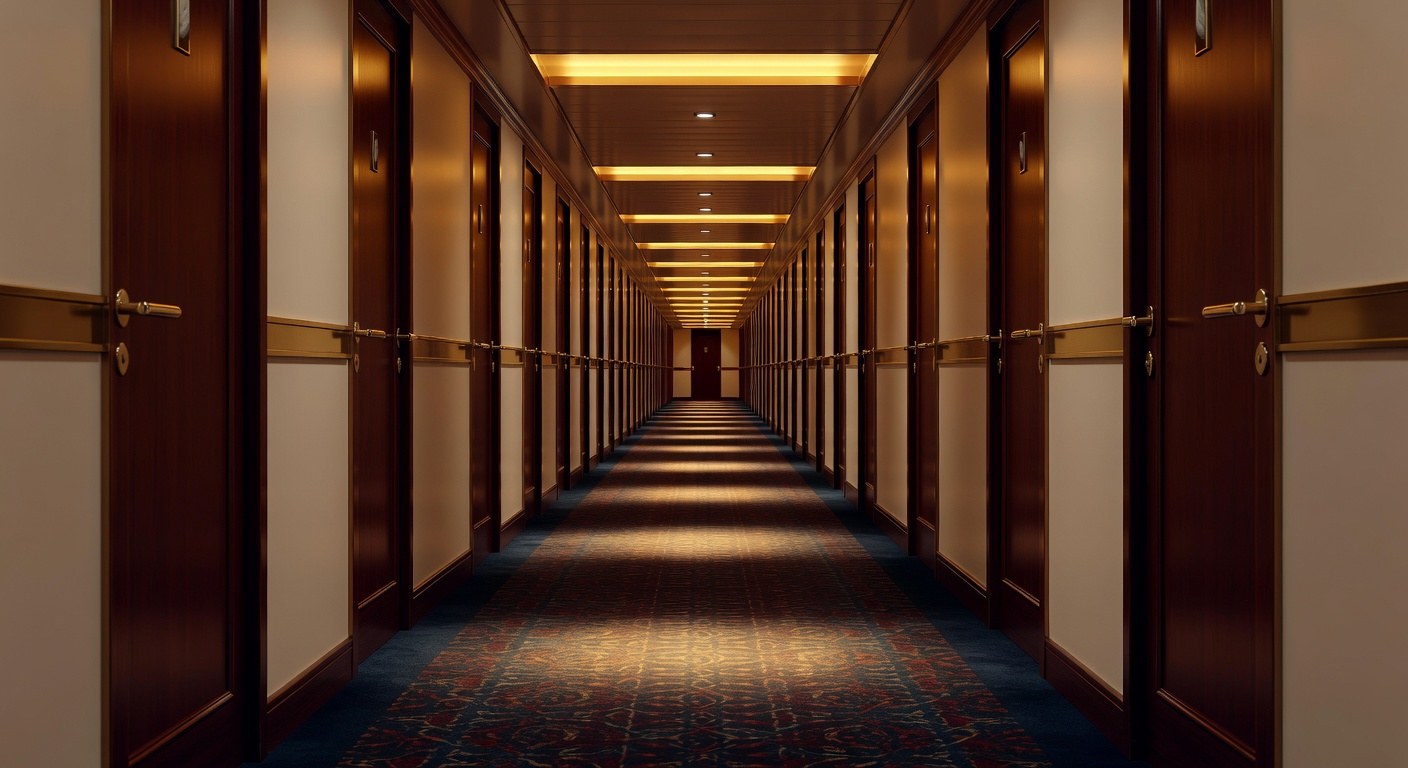
A wide editorial travel photograph of a long, empty cruise ship corridor with numbered cabin doors receding into the distance, shot from a low angle with warm overhead lighting casting a sense of myst
A category guarantee — often shortened to GTY on booking sites — is one of those cruise terms that sounds more complicated than it is. You pick the type of cabin you want (inside, oceanview, balcony, or suite), you pay a fare that's typically lower than what you'd pay to choose a specific room, and the cruise line picks the exact stateroom for you. You're guaranteed to get at least the category you booked, and there's a chance you'll be bumped into something better. But the room number, the deck, the location on the ship? That's out of your hands.
Whether that trade-off makes sense depends entirely on how you travel, what you care about, and how comfortable you are with a bit of uncertainty. The rest of this piece lays out the mechanics, the genuine advantages, and the specific situations where a guarantee booking can quietly undermine a trip.
The Bottom Line
How a Category Guarantee Actually Works
When you browse cabins on a cruise line's website, you'll typically see specific staterooms listed with deck numbers, locations on the ship, and sometimes photos of the view. A category guarantee listing looks different. It usually just shows the category — "Balcony Guarantee" or "Interior Guarantee" — with no room number attached.
At the time of booking, you're locked into the category and the fare. The cruise line then assigns your specific cabin closer to the sailing date — sometimes just days or even hours before departure. That assignment is based on whatever inventory remains, and it's typically final. You can't request a swap once the room is allocated.
Cruise lines use guarantee cabins as a logistics tool as much as a pricing one. If a sailing has scattered unsold rooms across several decks, offering a guarantee fare lets the line sell those cabins at a slight discount while retaining flexibility to manage group bookings, accessible stateroom requests, and last-minute inventory shifts. Understanding that motive helps explain when guarantees appear and why they behave the way they do.
Where the Savings Actually Come From
The discount varies, but it's real. Depending on the cruise line, the sailing date, and remaining inventory, a guarantee fare might save anywhere from roughly $50 to $500 or more per cabin compared to hand-picking the same category of room (based on fares observed across major cruise lines as of early 2026). Savings tend to be larger on higher-category bookings — a balcony guarantee, for instance, often shows a bigger gap than an interior guarantee, simply because there's more price spread within the balcony tier.
The logic is straightforward: when you select a specific cabin, you're paying for certainty. You know you'll be on Deck 9, midship, starboard side. That certainty has value, and the cruise line charges for it. When you book a guarantee, you trade that certainty for a lower fare. The cabin itself is the same quality — same square footage, same amenities, same category. You're just giving up your say in where on the ship it sits.
Guarantee fares aren't available on every sailing. They're most common on departures that haven't sold out, which means you'll spot them more often on shoulder-season cruises, repositioning voyages, and sailings still filling up within a few months of departure. On a hot Christmas Caribbean sailing that's 95 percent booked, guarantee inventory may not exist at all.
The Upgrade Possibility — and Why You Shouldn't Bank on It
This is the part that generates the most excitement and the most misunderstanding. When you book a guarantee, the cruise line promises you'll receive at least the category you paid for. If that category is fully booked by the time rooms are assigned, they move you up — potentially to a higher-tier cabin within the same category, or even to the next category entirely. Book an oceanview guarantee on a ship where all the oceanview rooms are spoken for, and you might end up in a balcony at no extra charge.
It happens. Seasoned cruisers in online communities share upgrade stories regularly, and they're not exaggerating. But the mechanics matter: upgrades depend on your booked category being nearly full while a higher one has space. On a popular peak-season sailing where every balcony sold months ago, an upgrade from oceanview is more likely. On a shoulder-season voyage with plenty of available rooms across all categories, you'll probably just get a standard cabin in what you booked — possibly in a less desirable location, because the prime spots were cherry-picked by travellers who paid to choose.
The safest mindset: book a guarantee only if you'd be perfectly content with the category you're paying for. If you get an upgrade, wonderful. If you don't, you still got a fair deal at a lower price. Treating the upgrade as the reason to book is how disappointment gets built into a trip before it even starts.
Book a guarantee only if you'd be perfectly content with the category you're paying for. Treat any upgrade as a bonus, not the plan.
What You're Actually Giving Up
The trade-off is entirely about control, and it shows up in ways that matter more than many first-time cruisers expect.
Location on the ship is the biggest variable. A cabin midship on a lower deck tends to feel less motion than one at the bow or stern on a higher deck. If you're prone to seasickness — or simply unsure whether you will be — giving up location control is a meaningful concession. You could end up in the smoothest spot on the ship. You could also end up at the very front of Deck 2, where the pitch and roll are most pronounced in open water.
Proximity to noise is another factor. Some cabins sit directly below the pool deck, adjacent to the nightclub, or above the engine room. Light sleepers who choose their own cabin can cross-reference a deck plan and avoid known problem spots. With a guarantee, you're trusting the assignment process — and that process isn't optimising for your sleep quality.
Then there's group travel. If you're sailing with family or friends and want cabins near each other, guarantee bookings make coordination very difficult. Each guarantee is assigned independently, and there's no reliable mechanism to request adjacent rooms. A couple booking a single cabin? No issue. A multi-generational family booking four cabins and hoping to be on the same deck? Choose your rooms.
Bed configuration can also be unpredictable. Many cruise cabins have twin beds that convert to a queen, but not all configurations within a category are identical. Some guarantee bookings have resulted in travellers receiving a layout they didn't expect — twins that can't be pushed together, or a sofa bed instead of a standard setup. Most cruise lines will try to accommodate reasonable requests, but accommodation isn't the same as a guarantee.
Who This Works Best For
Category guarantees aren't for everyone, but they're a genuinely smart option for a specific type of traveller.
Couples or solo travellers who treat the cabin as a base camp — somewhere to sleep, shower, and stash luggage between port days, pool sessions, and late dinners — have the least to lose from an unpredictable location. If you're planning to spend fourteen hours a day outside your room, the difference between Deck 7 midship and Deck 4 forward shrinks considerably.
Budget-conscious first-timers stand to gain the most. A guarantee fare can be the difference between affording the category you actually want and settling for a lower tier. If the choice is between a specific inside cabin and a guarantee balcony at nearly the same price, most travellers will be happier waking up to daylight — regardless of which deck that daylight comes from.
Flexible, last-minute bookers are the natural audience for guarantees. These fares often appear closer to the sailing date as cruise lines work to fill remaining inventory. If you're the type who books three weeks out and considers everything a bonus, this pricing model was built with your temperament in mind.
Who Should Probably Skip It
If any of the following sounds familiar, the extra cost of choosing a specific cabin is money well spent.
You get seasick, or you don't know yet whether you do. A first cruise is the wrong time to leave cabin location to chance. A midship cabin on a lower deck gives you the best shot at a comfortable ride, and that's worth paying for when you're still learning how your body handles open water. Saving $150 on the fare but spending the first two days horizontal isn't a bargain.
You're travelling with children. Families with kids tend to want predictability — knowing exactly where the cabin sits relative to the kids' club, the pool, the buffet, and the elevators. Running three decks at bedtime because your cabin ended up far from everything is the kind of small friction that wears on a family trip.
You're celebrating something. Anniversary, honeymoon, milestone birthday — when a trip carries emotional weight, you want to control the details. A guarantee cabin assigned next to the crew corridor isn't the end of the world on a casual getaway. On a trip that's supposed to feel special, it stings.
You're booking for a group. Guarantee bookings and group travel don't mix well. If being near each other matters — and for most groups it does — pick your rooms and confirm them together.
You have accessibility needs. Accessible staterooms are limited in number and specific in location. Most cruise lines handle these bookings through dedicated channels rather than the guarantee system. Always confirm directly with the line or your travel agent to ensure your needs are met.
One Detail Most Guides Leave Out
Here's something that rarely appears in the standard pros-and-cons rundown: guarantee bookings can affect your ability to pre-book other parts of your trip. Some cruise lines tie speciality dining reservations, spa appointments, and shore excursion time slots to your cabin assignment. If your room isn't assigned until a few days before sailing, you may find that the popular dinner slots and high-demand excursions are already spoken for by the time your booking is fully confirmed.
This isn't universal — policies vary by cruise line — but it's worth checking before you book. On lines with robust pre-booking systems, early cabin assignment is a genuine perk that goes beyond just knowing your room number. Ask your travel agent whether the line you're considering lets guarantee passengers pre-book activities, or whether you'll be working from whatever's left.
The Real Question Behind the Decision
A category guarantee is not a mystery box. It's a clearly defined trade: you pay less, you get the same type of cabin, and you let the cruise line decide where it goes. The potential for an upgrade is real but unreliable. The savings are modest but consistent. The loss of control is the only genuine downside, and it only matters if location, proximity, or predictability are priorities for this particular trip.
For an easygoing first-timer, it's one of the simplest ways to stretch a budget without downgrading the experience. For someone who wants to plan every element of the voyage, it introduces uncertainty that no discount can offset. Neither approach is wrong. They just reflect different ideas about what makes a vacation feel right.
Know which type you are before you book. The cabin will sort itself out.
Category Guarantee Staterooms: What You're Actually Agreeing To
You save money but give up control over where you sleep. Here's how to know if that trade-off works for you.
A wide editorial travel photograph of a long, empty cruise ship corridor with numbered cabin doors receding into the distance, shot from a low angle with warm overhead lighting casting a sense of myst
A category guarantee — often shortened to GTY on booking sites — is one of those cruise terms that sounds more complicated than it is. You pick the type of cabin you want (inside, oceanview, balcony, or suite), you pay a fare that's typically lower than what you'd pay to choose a specific room, and the cruise line picks the exact stateroom for you. You're guaranteed to get at least the category you booked, and there's a chance you'll be bumped into something better. But the room number, the deck, the location on the ship? That's out of your hands.
Whether that trade-off makes sense depends entirely on how you travel, what you care about, and how comfortable you are with a bit of uncertainty. The rest of this piece lays out the mechanics, the genuine advantages, and the specific situations where a guarantee booking can quietly undermine a trip.
The Bottom Line
How a Category Guarantee Actually Works
When you browse cabins on a cruise line's website, you'll typically see specific staterooms listed with deck numbers, locations on the ship, and sometimes photos of the view. A category guarantee listing looks different. It usually just shows the category — "Balcony Guarantee" or "Interior Guarantee" — with no room number attached.
At the time of booking, you're locked into the category and the fare. The cruise line then assigns your specific cabin closer to the sailing date — sometimes just days or even hours before departure. That assignment is based on whatever inventory remains, and it's typically final. You can't request a swap once the room is allocated.
Cruise lines use guarantee cabins as a logistics tool as much as a pricing one. If a sailing has scattered unsold rooms across several decks, offering a guarantee fare lets the line sell those cabins at a slight discount while retaining flexibility to manage group bookings, accessible stateroom requests, and last-minute inventory shifts. Understanding that motive helps explain when guarantees appear and why they behave the way they do.
Where the Savings Actually Come From
The discount varies, but it's real. Depending on the cruise line, the sailing date, and remaining inventory, a guarantee fare might save anywhere from roughly $50 to $500 or more per cabin compared to hand-picking the same category of room (based on fares observed across major cruise lines as of early 2026). Savings tend to be larger on higher-category bookings — a balcony guarantee, for instance, often shows a bigger gap than an interior guarantee, simply because there's more price spread within the balcony tier.
The logic is straightforward: when you select a specific cabin, you're paying for certainty. You know you'll be on Deck 9, midship, starboard side. That certainty has value, and the cruise line charges for it. When you book a guarantee, you trade that certainty for a lower fare. The cabin itself is the same quality — same square footage, same amenities, same category. You're just giving up your say in where on the ship it sits.
Guarantee fares aren't available on every sailing. They're most common on departures that haven't sold out, which means you'll spot them more often on shoulder-season cruises, repositioning voyages, and sailings still filling up within a few months of departure. On a hot Christmas Caribbean sailing that's 95 percent booked, guarantee inventory may not exist at all.
The Upgrade Possibility — and Why You Shouldn't Bank on It
This is the part that generates the most excitement and the most misunderstanding. When you book a guarantee, the cruise line promises you'll receive at least the category you paid for. If that category is fully booked by the time rooms are assigned, they move you up — potentially to a higher-tier cabin within the same category, or even to the next category entirely. Book an oceanview guarantee on a ship where all the oceanview rooms are spoken for, and you might end up in a balcony at no extra charge.
It happens. Seasoned cruisers in online communities share upgrade stories regularly, and they're not exaggerating. But the mechanics matter: upgrades depend on your booked category being nearly full while a higher one has space. On a popular peak-season sailing where every balcony sold months ago, an upgrade from oceanview is more likely. On a shoulder-season voyage with plenty of available rooms across all categories, you'll probably just get a standard cabin in what you booked — possibly in a less desirable location, because the prime spots were cherry-picked by travellers who paid to choose.
The safest mindset: book a guarantee only if you'd be perfectly content with the category you're paying for. If you get an upgrade, wonderful. If you don't, you still got a fair deal at a lower price. Treating the upgrade as the reason to book is how disappointment gets built into a trip before it even starts.
Book a guarantee only if you'd be perfectly content with the category you're paying for. Treat any upgrade as a bonus, not the plan.
What You're Actually Giving Up
The trade-off is entirely about control, and it shows up in ways that matter more than many first-time cruisers expect.
Location on the ship is the biggest variable. A cabin midship on a lower deck tends to feel less motion than one at the bow or stern on a higher deck. If you're prone to seasickness — or simply unsure whether you will be — giving up location control is a meaningful concession. You could end up in the smoothest spot on the ship. You could also end up at the very front of Deck 2, where the pitch and roll are most pronounced in open water.
Proximity to noise is another factor. Some cabins sit directly below the pool deck, adjacent to the nightclub, or above the engine room. Light sleepers who choose their own cabin can cross-reference a deck plan and avoid known problem spots. With a guarantee, you're trusting the assignment process — and that process isn't optimising for your sleep quality.
Then there's group travel. If you're sailing with family or friends and want cabins near each other, guarantee bookings make coordination very difficult. Each guarantee is assigned independently, and there's no reliable mechanism to request adjacent rooms. A couple booking a single cabin? No issue. A multi-generational family booking four cabins and hoping to be on the same deck? Choose your rooms.
Bed configuration can also be unpredictable. Many cruise cabins have twin beds that convert to a queen, but not all configurations within a category are identical. Some guarantee bookings have resulted in travellers receiving a layout they didn't expect — twins that can't be pushed together, or a sofa bed instead of a standard setup. Most cruise lines will try to accommodate reasonable requests, but accommodation isn't the same as a guarantee.
Who This Works Best For
Category guarantees aren't for everyone, but they're a genuinely smart option for a specific type of traveller.
Couples or solo travellers who treat the cabin as a base camp — somewhere to sleep, shower, and stash luggage between port days, pool sessions, and late dinners — have the least to lose from an unpredictable location. If you're planning to spend fourteen hours a day outside your room, the difference between Deck 7 midship and Deck 4 forward shrinks considerably.
Budget-conscious first-timers stand to gain the most. A guarantee fare can be the difference between affording the category you actually want and settling for a lower tier. If the choice is between a specific inside cabin and a guarantee balcony at nearly the same price, most travellers will be happier waking up to daylight — regardless of which deck that daylight comes from.
Flexible, last-minute bookers are the natural audience for guarantees. These fares often appear closer to the sailing date as cruise lines work to fill remaining inventory. If you're the type who books three weeks out and considers everything a bonus, this pricing model was built with your temperament in mind.
Who Should Probably Skip It
If any of the following sounds familiar, the extra cost of choosing a specific cabin is money well spent.
You get seasick, or you don't know yet whether you do. A first cruise is the wrong time to leave cabin location to chance. A midship cabin on a lower deck gives you the best shot at a comfortable ride, and that's worth paying for when you're still learning how your body handles open water. Saving $150 on the fare but spending the first two days horizontal isn't a bargain.
You're travelling with children. Families with kids tend to want predictability — knowing exactly where the cabin sits relative to the kids' club, the pool, the buffet, and the elevators. Running three decks at bedtime because your cabin ended up far from everything is the kind of small friction that wears on a family trip.
You're celebrating something. Anniversary, honeymoon, milestone birthday — when a trip carries emotional weight, you want to control the details. A guarantee cabin assigned next to the crew corridor isn't the end of the world on a casual getaway. On a trip that's supposed to feel special, it stings.
You're booking for a group. Guarantee bookings and group travel don't mix well. If being near each other matters — and for most groups it does — pick your rooms and confirm them together.
You have accessibility needs. Accessible staterooms are limited in number and specific in location. Most cruise lines handle these bookings through dedicated channels rather than the guarantee system. Always confirm directly with the line or your travel agent to ensure your needs are met.
One Detail Most Guides Leave Out
Here's something that rarely appears in the standard pros-and-cons rundown: guarantee bookings can affect your ability to pre-book other parts of your trip. Some cruise lines tie speciality dining reservations, spa appointments, and shore excursion time slots to your cabin assignment. If your room isn't assigned until a few days before sailing, you may find that the popular dinner slots and high-demand excursions are already spoken for by the time your booking is fully confirmed.
This isn't universal — policies vary by cruise line — but it's worth checking before you book. On lines with robust pre-booking systems, early cabin assignment is a genuine perk that goes beyond just knowing your room number. Ask your travel agent whether the line you're considering lets guarantee passengers pre-book activities, or whether you'll be working from whatever's left.
The Real Question Behind the Decision
A category guarantee is not a mystery box. It's a clearly defined trade: you pay less, you get the same type of cabin, and you let the cruise line decide where it goes. The potential for an upgrade is real but unreliable. The savings are modest but consistent. The loss of control is the only genuine downside, and it only matters if location, proximity, or predictability are priorities for this particular trip.
For an easygoing first-timer, it's one of the simplest ways to stretch a budget without downgrading the experience. For someone who wants to plan every element of the voyage, it introduces uncertainty that no discount can offset. Neither approach is wrong. They just reflect different ideas about what makes a vacation feel right.
Know which type you are before you book. The cabin will sort itself out.
Category Guarantee Staterooms: What You're Actually Agreeing To

Category Guarantee Staterooms: What You're Actually Agreeing To
You save money but give up control over where you sleep. Here's how to know if that trade-off works for you.
A wide editorial travel photograph of a long, empty cruise ship corridor with numbered cabin doors receding into the distance, shot from a low angle with warm overhead lighting casting a sense of myst
A category guarantee — often shortened to GTY on booking sites — is one of those cruise terms that sounds more complicated than it is. You pick the type of cabin you want (inside, oceanview, balcony, or suite), you pay a fare that's typically lower than what you'd pay to choose a specific room, and the cruise line picks the exact stateroom for you. You're guaranteed to get at least the category you booked, and there's a chance you'll be bumped into something better. But the room number, the deck, the location on the ship? That's out of your hands.
Whether that trade-off makes sense depends entirely on how you travel, what you care about, and how comfortable you are with a bit of uncertainty. The rest of this piece lays out the mechanics, the genuine advantages, and the specific situations where a guarantee booking can quietly undermine a trip.
The Bottom Line
How a Category Guarantee Actually Works
When you browse cabins on a cruise line's website, you'll typically see specific staterooms listed with deck numbers, locations on the ship, and sometimes photos of the view. A category guarantee listing looks different. It usually just shows the category — "Balcony Guarantee" or "Interior Guarantee" — with no room number attached.
At the time of booking, you're locked into the category and the fare. The cruise line then assigns your specific cabin closer to the sailing date — sometimes just days or even hours before departure. That assignment is based on whatever inventory remains, and it's typically final. You can't request a swap once the room is allocated.
Cruise lines use guarantee cabins as a logistics tool as much as a pricing one. If a sailing has scattered unsold rooms across several decks, offering a guarantee fare lets the line sell those cabins at a slight discount while retaining flexibility to manage group bookings, accessible stateroom requests, and last-minute inventory shifts. Understanding that motive helps explain when guarantees appear and why they behave the way they do.
Where the Savings Actually Come From
The discount varies, but it's real. Depending on the cruise line, the sailing date, and remaining inventory, a guarantee fare might save anywhere from roughly $50 to $500 or more per cabin compared to hand-picking the same category of room (based on fares observed across major cruise lines as of early 2026). Savings tend to be larger on higher-category bookings — a balcony guarantee, for instance, often shows a bigger gap than an interior guarantee, simply because there's more price spread within the balcony tier.
The logic is straightforward: when you select a specific cabin, you're paying for certainty. You know you'll be on Deck 9, midship, starboard side. That certainty has value, and the cruise line charges for it. When you book a guarantee, you trade that certainty for a lower fare. The cabin itself is the same quality — same square footage, same amenities, same category. You're just giving up your say in where on the ship it sits.
Guarantee fares aren't available on every sailing. They're most common on departures that haven't sold out, which means you'll spot them more often on shoulder-season cruises, repositioning voyages, and sailings still filling up within a few months of departure. On a hot Christmas Caribbean sailing that's 95 percent booked, guarantee inventory may not exist at all.
The Upgrade Possibility — and Why You Shouldn't Bank on It
This is the part that generates the most excitement and the most misunderstanding. When you book a guarantee, the cruise line promises you'll receive at least the category you paid for. If that category is fully booked by the time rooms are assigned, they move you up — potentially to a higher-tier cabin within the same category, or even to the next category entirely. Book an oceanview guarantee on a ship where all the oceanview rooms are spoken for, and you might end up in a balcony at no extra charge.
It happens. Seasoned cruisers in online communities share upgrade stories regularly, and they're not exaggerating. But the mechanics matter: upgrades depend on your booked category being nearly full while a higher one has space. On a popular peak-season sailing where every balcony sold months ago, an upgrade from oceanview is more likely. On a shoulder-season voyage with plenty of available rooms across all categories, you'll probably just get a standard cabin in what you booked — possibly in a less desirable location, because the prime spots were cherry-picked by travellers who paid to choose.
The safest mindset: book a guarantee only if you'd be perfectly content with the category you're paying for. If you get an upgrade, wonderful. If you don't, you still got a fair deal at a lower price. Treating the upgrade as the reason to book is how disappointment gets built into a trip before it even starts.
Book a guarantee only if you'd be perfectly content with the category you're paying for. Treat any upgrade as a bonus, not the plan.
What You're Actually Giving Up
The trade-off is entirely about control, and it shows up in ways that matter more than many first-time cruisers expect.
Location on the ship is the biggest variable. A cabin midship on a lower deck tends to feel less motion than one at the bow or stern on a higher deck. If you're prone to seasickness — or simply unsure whether you will be — giving up location control is a meaningful concession. You could end up in the smoothest spot on the ship. You could also end up at the very front of Deck 2, where the pitch and roll are most pronounced in open water.
Proximity to noise is another factor. Some cabins sit directly below the pool deck, adjacent to the nightclub, or above the engine room. Light sleepers who choose their own cabin can cross-reference a deck plan and avoid known problem spots. With a guarantee, you're trusting the assignment process — and that process isn't optimising for your sleep quality.
Then there's group travel. If you're sailing with family or friends and want cabins near each other, guarantee bookings make coordination very difficult. Each guarantee is assigned independently, and there's no reliable mechanism to request adjacent rooms. A couple booking a single cabin? No issue. A multi-generational family booking four cabins and hoping to be on the same deck? Choose your rooms.
Bed configuration can also be unpredictable. Many cruise cabins have twin beds that convert to a queen, but not all configurations within a category are identical. Some guarantee bookings have resulted in travellers receiving a layout they didn't expect — twins that can't be pushed together, or a sofa bed instead of a standard setup. Most cruise lines will try to accommodate reasonable requests, but accommodation isn't the same as a guarantee.
Who This Works Best For
Category guarantees aren't for everyone, but they're a genuinely smart option for a specific type of traveller.
Couples or solo travellers who treat the cabin as a base camp — somewhere to sleep, shower, and stash luggage between port days, pool sessions, and late dinners — have the least to lose from an unpredictable location. If you're planning to spend fourteen hours a day outside your room, the difference between Deck 7 midship and Deck 4 forward shrinks considerably.
Budget-conscious first-timers stand to gain the most. A guarantee fare can be the difference between affording the category you actually want and settling for a lower tier. If the choice is between a specific inside cabin and a guarantee balcony at nearly the same price, most travellers will be happier waking up to daylight — regardless of which deck that daylight comes from.
Flexible, last-minute bookers are the natural audience for guarantees. These fares often appear closer to the sailing date as cruise lines work to fill remaining inventory. If you're the type who books three weeks out and considers everything a bonus, this pricing model was built with your temperament in mind.
Who Should Probably Skip It
If any of the following sounds familiar, the extra cost of choosing a specific cabin is money well spent.
You get seasick, or you don't know yet whether you do. A first cruise is the wrong time to leave cabin location to chance. A midship cabin on a lower deck gives you the best shot at a comfortable ride, and that's worth paying for when you're still learning how your body handles open water. Saving $150 on the fare but spending the first two days horizontal isn't a bargain.
You're travelling with children. Families with kids tend to want predictability — knowing exactly where the cabin sits relative to the kids' club, the pool, the buffet, and the elevators. Running three decks at bedtime because your cabin ended up far from everything is the kind of small friction that wears on a family trip.
You're celebrating something. Anniversary, honeymoon, milestone birthday — when a trip carries emotional weight, you want to control the details. A guarantee cabin assigned next to the crew corridor isn't the end of the world on a casual getaway. On a trip that's supposed to feel special, it stings.
You're booking for a group. Guarantee bookings and group travel don't mix well. If being near each other matters — and for most groups it does — pick your rooms and confirm them together.
You have accessibility needs. Accessible staterooms are limited in number and specific in location. Most cruise lines handle these bookings through dedicated channels rather than the guarantee system. Always confirm directly with the line or your travel agent to ensure your needs are met.
One Detail Most Guides Leave Out
Here's something that rarely appears in the standard pros-and-cons rundown: guarantee bookings can affect your ability to pre-book other parts of your trip. Some cruise lines tie speciality dining reservations, spa appointments, and shore excursion time slots to your cabin assignment. If your room isn't assigned until a few days before sailing, you may find that the popular dinner slots and high-demand excursions are already spoken for by the time your booking is fully confirmed.
This isn't universal — policies vary by cruise line — but it's worth checking before you book. On lines with robust pre-booking systems, early cabin assignment is a genuine perk that goes beyond just knowing your room number. Ask your travel agent whether the line you're considering lets guarantee passengers pre-book activities, or whether you'll be working from whatever's left.
The Real Question Behind the Decision
A category guarantee is not a mystery box. It's a clearly defined trade: you pay less, you get the same type of cabin, and you let the cruise line decide where it goes. The potential for an upgrade is real but unreliable. The savings are modest but consistent. The loss of control is the only genuine downside, and it only matters if location, proximity, or predictability are priorities for this particular trip.
For an easygoing first-timer, it's one of the simplest ways to stretch a budget without downgrading the experience. For someone who wants to plan every element of the voyage, it introduces uncertainty that no discount can offset. Neither approach is wrong. They just reflect different ideas about what makes a vacation feel right.
Know which type you are before you book. The cabin will sort itself out.


